Thursday, September 24 | 12:00 PM – 1:00 PM
Free, virtual program; registration required

Author Book Talk
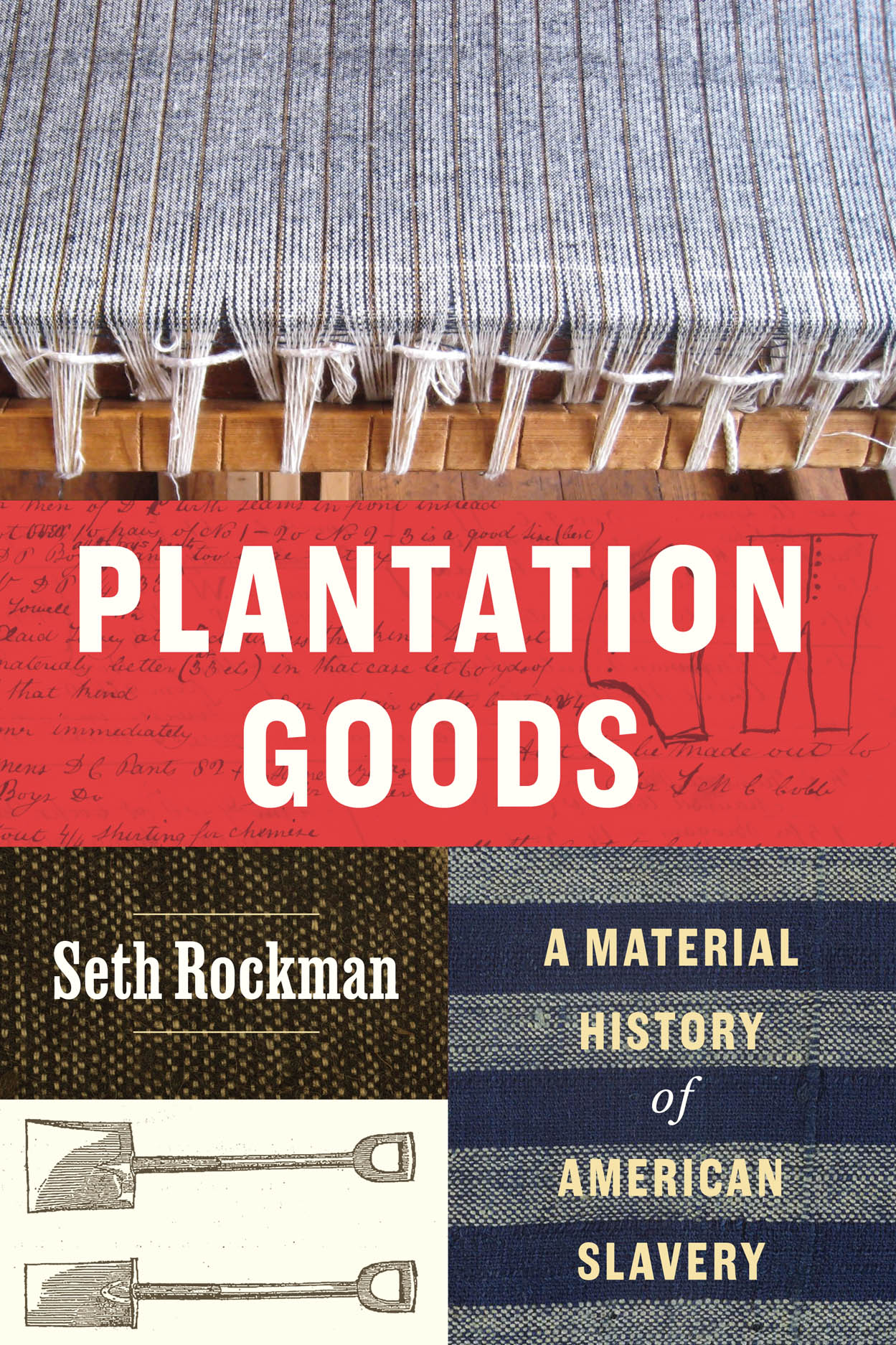
Seth Rockman, Plantation Goods: A Material History of American Slavery (University of Chicago Press, 2024)
Thursday, September 24 | 12:00 PM – 1:00 PM
Free, virtual program; registration required
About the Author: Seth Rockman is a historian of the United States focusing on the period between the American Revolution and the Civil War and serves as George L. Littlefield Professor of American History and Director of Undergraduate Studies in the Department of History at Brown University. His research unfolds at the intersection of slavery studies, labor history, material culture studies, and the history of capitalism. Rockman’s earlier work— the award-winning Scraping By: Wage Labor, Slavery, and Survival in Early Baltimore (2009) and the co-edited volume Slavery’s Capitalism: A New History of American Economic Development (2016)— sought to better understand the relationship of slavery and capitalism in the American past. In December 2022, Rockman shared his research findings with the US House Financial Services Committee in live testimony. Rockman’s newest book, Plantation Goods: A Material History of American Slavery, was published by University of Chicago Press in Fall 2024 and named a finalist for the Pulitzer Prize in History. The book won the 2025 Philip Taft Labor History Book Award, earned distinction as a finalist for the Mark Lynton History Prize, and appears on the longlist for the Cundill Prize. At Brown, Rockman sits on the faculty advisory board of the Ruth J. Simmons Center for the Study of Slavery and Justice and leads their Slavery and Finance research cluster. He published “The Dialectics of Racism and Repair” in the 2021 re-issue of the university’s influential Slavery & Justice Report. Rockman is a faculty affiliate of the William R. Rhodes Center for International Economics and Finance and regularly teaches a course on slavery and capitalism for the IE-Brown Executive MBA program.
About the Book: The industrializing North and the agricultural South—that’s how we have been taught to think about the United States in the early nineteenth century. But in doing so, we overlook the economic ties that held the nation together before the Civil War. We miss slavery’s long reach into small New England communities, just as we fail to see the role of Northern manufacturing in shaping the terrain of human bondage in the South. Using plantation goods—the shirts, hats, hoes, shovels, shoes, axes, and whips made in the North for use in the South—historian Seth Rockman locates the biggest stories in American history in the everyday objects that stitched together the lives and livelihoods of Americans—white and Black, male and female, enslaved and free—across an expanding nation. By following the stories of material objects, such as shoes made by Massachusetts farm women that found their way to the feet of a Mississippi slave, Rockman reveals a national economy organized by slavery—a slavery that outsourced the production of its supplies to the North, and a North that outsourced its slavery to the South. Melding business and labor history through powerful storytelling, Plantation Goods brings northern industrialists, southern slaveholders, enslaved field hands, and paid factory laborers into the same picture. In one part of the country, entrepreneurs envisioned fortunes to be made from “planter’s hoes” and rural women spent their days weaving “negro cloth” and assembling “slave brogans.” In another, enslaved people actively consumed textiles and tools imported from the North to contest their bondage. In between, merchants, marketers, storekeepers, and debt collectors laid claim to the profits of a thriving interregional trade. Examining producers and consumers linked in economic and moral relationships across great geographic and political distances, Plantation Goods explores how people in the nineteenth century thought about complicity with slavery while showing how slavery structured life nationwide and established a modern world of entrepreneurship and exploitation. Rockman brings together lines of American history that have for too long been told separately, as slavery and capitalism converge in something as deceptively ordinary as a humble pair of shoes.
Want to read the book before the program? You can buy a copy here