
Inside Out! Youth Voices for the Ocean
Museum Plaza
Opened: August 6, 2020
Closed: August 19, 2020

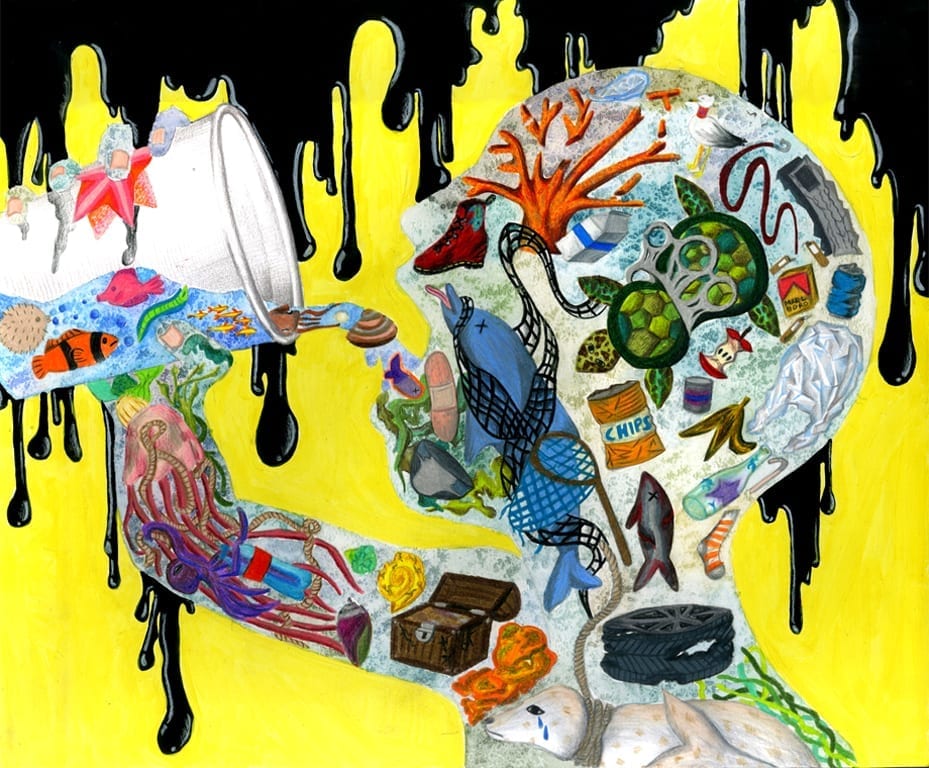
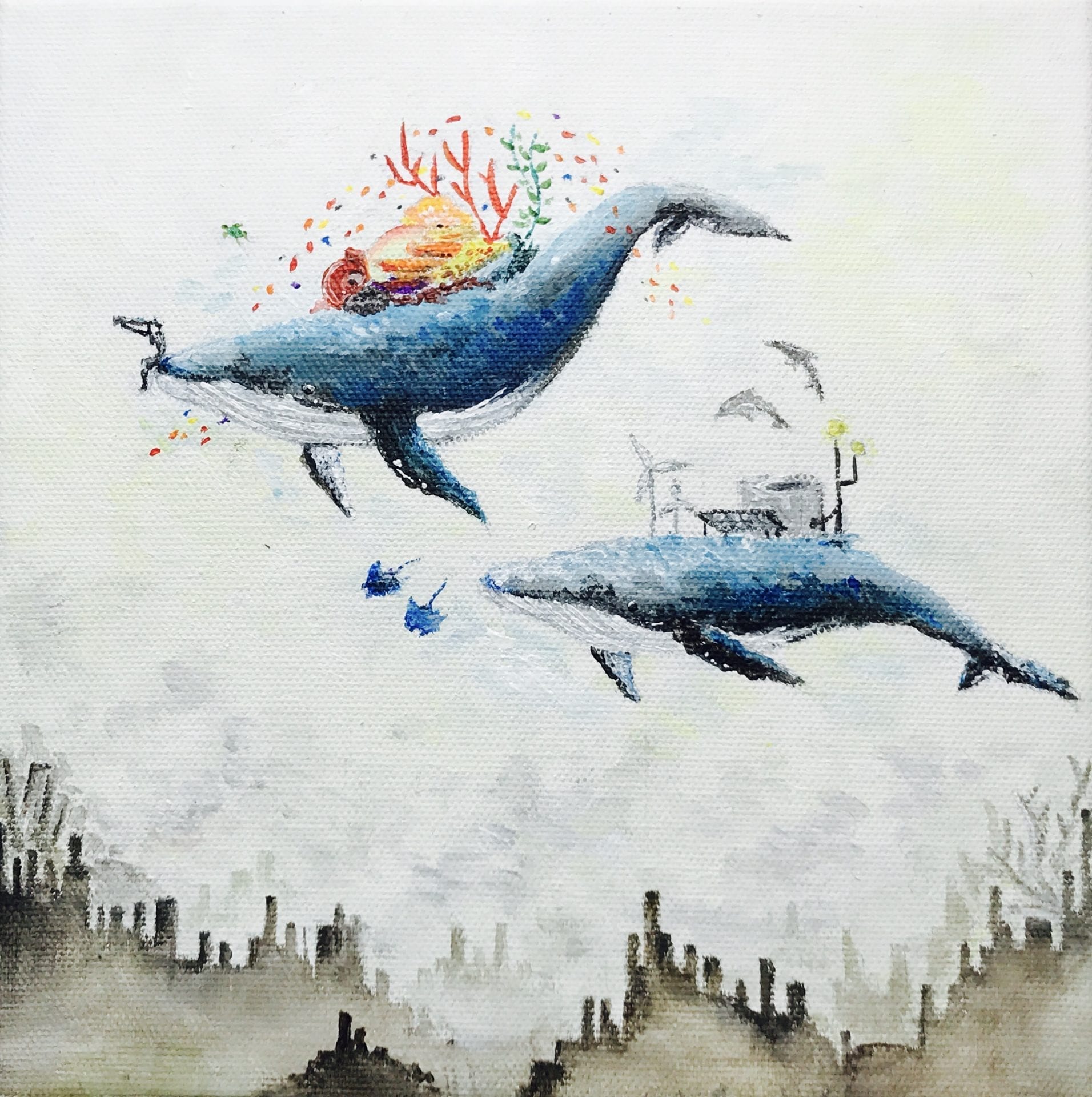
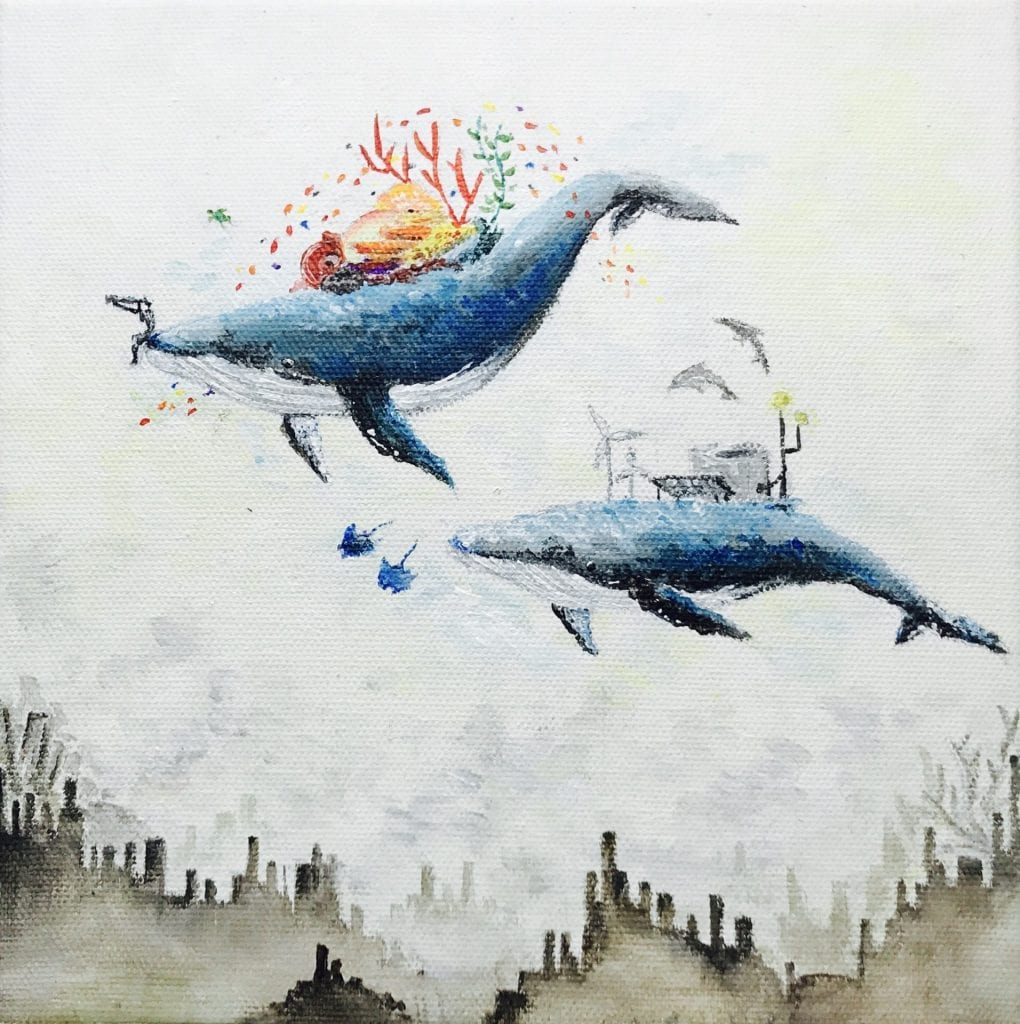
This special exhibit features artwork by the student winners of the international Ocean Awareness Contest run by local nonprofit Bow Seat Ocean Awareness Programs.
Since 2012, Bow Seat’s annual Ocean Awareness Contest has invited young people around the world to creatively explore critical conservation issues in ocean health—including plastic pollution, fossil fuel extraction, biodiversity loss, and climate change—with a focus on humans’ roles as both problem-makers and solvers. More than 13,000 students from 106 countries and all 50 U.S. states have responded through visual art, writing, film, and music.
These powerful works by young artists expose what is happening to our ocean; reflect on what it means to be a human in the 21st century; discover and advocate for solutions on personal and planetary scales; and inspire a culture of respect and action for all life on this blue planet.
Inside Out! Youth Voices for the Ocean exhibition was on view August 6 – August 19, 2020 on the Museum Plaza.
Curator: Bob Rocha, Director of Education and Science Programs
Curator Talk
Monday, August 10, 2020
with Alyssa Irizarry, Senior Vice President of Bow Seat Ocean Awareness Programs
View Zoom event HERE

Thanks To:
Whales Today is underwritten by the David P. Wheatland Charitable Trust, the Sidney J. Weinberg, Jr. Foundation, and the William M. Wood Foundation, with significant support from Woods Hole Oceanographic Institution, and the Naval Undersea Warfare Center Division, Newport, Rhode Island.

This exhibition is supported in part by the Mass Cultural Council, a state agency, through its Cultural Investment Portfolio Projects Program.
Inside Out!: The River and the Rail
Museum Plaza
Opened: September 17, 2020
Closed: September 30, 2020
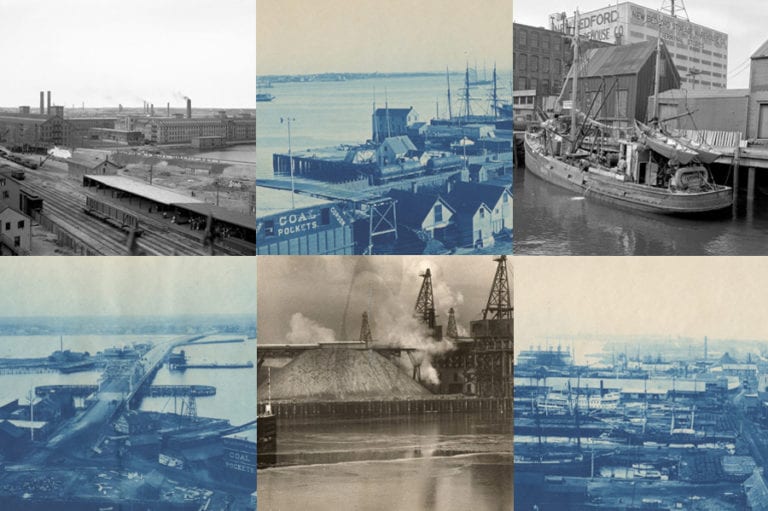
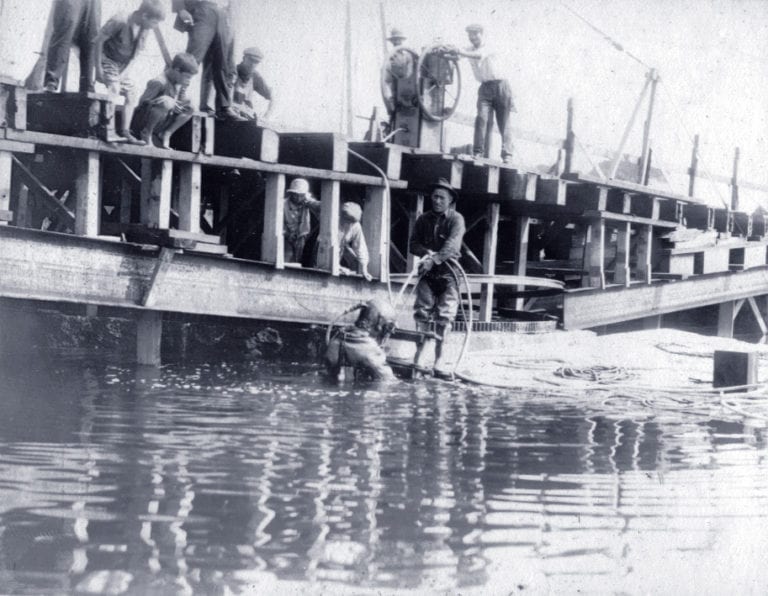
This exhibition used photography to document how the seaport of New Bedford adapted to new industries in the second half of the 1800s.
The primary means of that change included increased reliance upon the railroad, and increased reliance upon coal as the primary energy source to power growing industrial manufacturing including textile mills and other heavy industry. These industries grew here because the seaport infrastructure like wharves, which dated to the colonial era, and a railroad, which dated from the early 1840s, were pre-existing from the whaling era.
New Bedford’s waterfront changed dramatically over time. By 1890, whale ships were few, and the coal industry transformed the New Bedford waterfront. Large schooners, barges and steamers, carrying coal, cotton and lumber, were replacing whale ships but the reliance upon the sea for transport remained.
The rail as well saw much greater use as the millions of feet of cotton textiles were shipped to market, and the millions of tons of coal, moved through the port.
By 1905, coal pockets became the dominant features of the industrial waterfront. Millions of tons of coal fed textile mills and other manufacturing, as well as New England household heating use in the early 20th century. By the 1960s the mills began to close and the coal pockets disappeared and the railroad also stopped running.
While the train tracks remain, there is no evidence today of the coal industry in New Bedford, while the gigantic mills themselves are either being torn down or re-purposed as the port once again adapts to change.
Curator: Michael P. Dyer, New Bedford Whaling Museum Curator of Maritime History
Virtual Curator Talk
Tuesday, September 22, 2020
with Michael P. Dyer, New Bedford Whaling Museum Curator of Maritime History
View Zoom event HERE
Inside Out!: A Moment In Time
Museum Plaza
Opened: September 3, 2020
Closed: September 16, 2020
This exhibition showcased a selection of photographs from the Whaling Museum’s photo archive. Many of the photos were from the Prescott collection, which shows moments in time that were memorable to the Prescott family.
They were well-to-do and lived in New Bedford and Dartmouth. Their wealth is reflected in the content of some of their photographs, such as their up-to-date clothing and automobiles.
Curator: Emma Rocha, Curatorial Assistant
Virtual Curator Talk
September 3, 2020
with Emma Rocha, Curatorial Assistant
View Zoom event HERE
Inside Out!: A City of Immigrants: The Standard-Times Collection
Museum Plaza
Opened: August 20, 2020
Closed: September 2, 2020
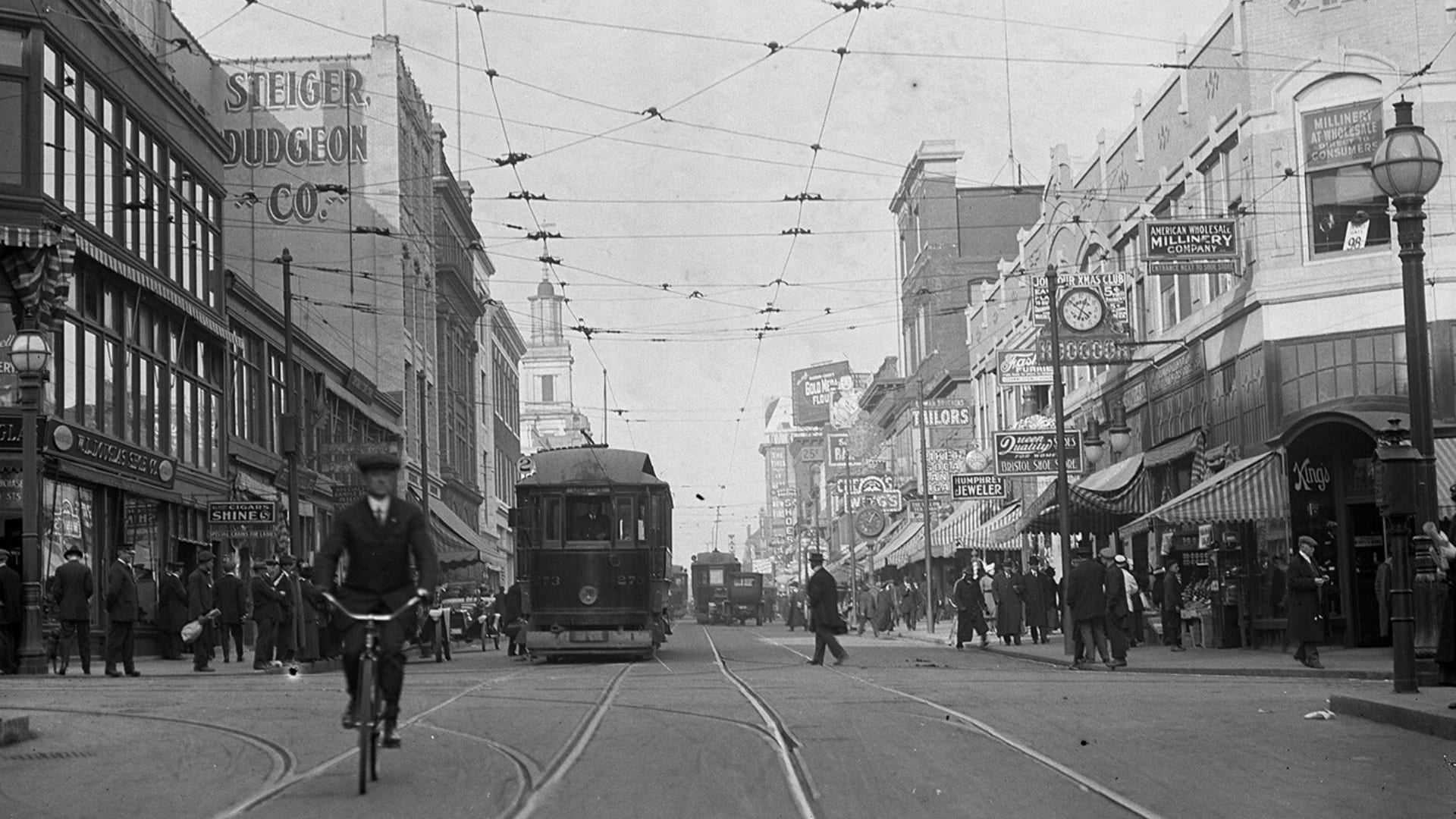
New Bedford is an extraordinary place of infinite possibilities where different paths from around the world have intersected and defined the city’s character.
As the New Bedford Whaling Museum embarks on Common Ground: A Community Mosaic, which is documenting the lived experience of people and communities in Greater New Bedford, I continue to be captivated by these images from our Standard-Times Collection, which capture turn-of-the-century communities and individuals in Greater New Bedford.
These images depict the development and stories of Polish, Chinese, Middle Eastern, Irish, Italian, Cape Verdean, Portuguese, Jewish, Greek, and other communities in the early 20th century. Immigration to New Bedford–a cosmopolitan city of incredible opportunity–shaped the landscape, culture, cuisine, and very character of the city. The presence, hard work, struggles and embrace of both homeland and New Bedford by immigrants made New Bedford a truly unique city which continues to be defined by its multicultural character.
Curator: Akeia de Barros Gomes, Curator of Social History
Virtual Curator Talk
Thursday, August 20, 2020
with Dr. Akeia de Barros Gomes
View Zoom event HERE