New Ecologies: May Babcock
New Bedford Whaling Museum
November 20, 2026-April 18, 2027
Center Street Gallery
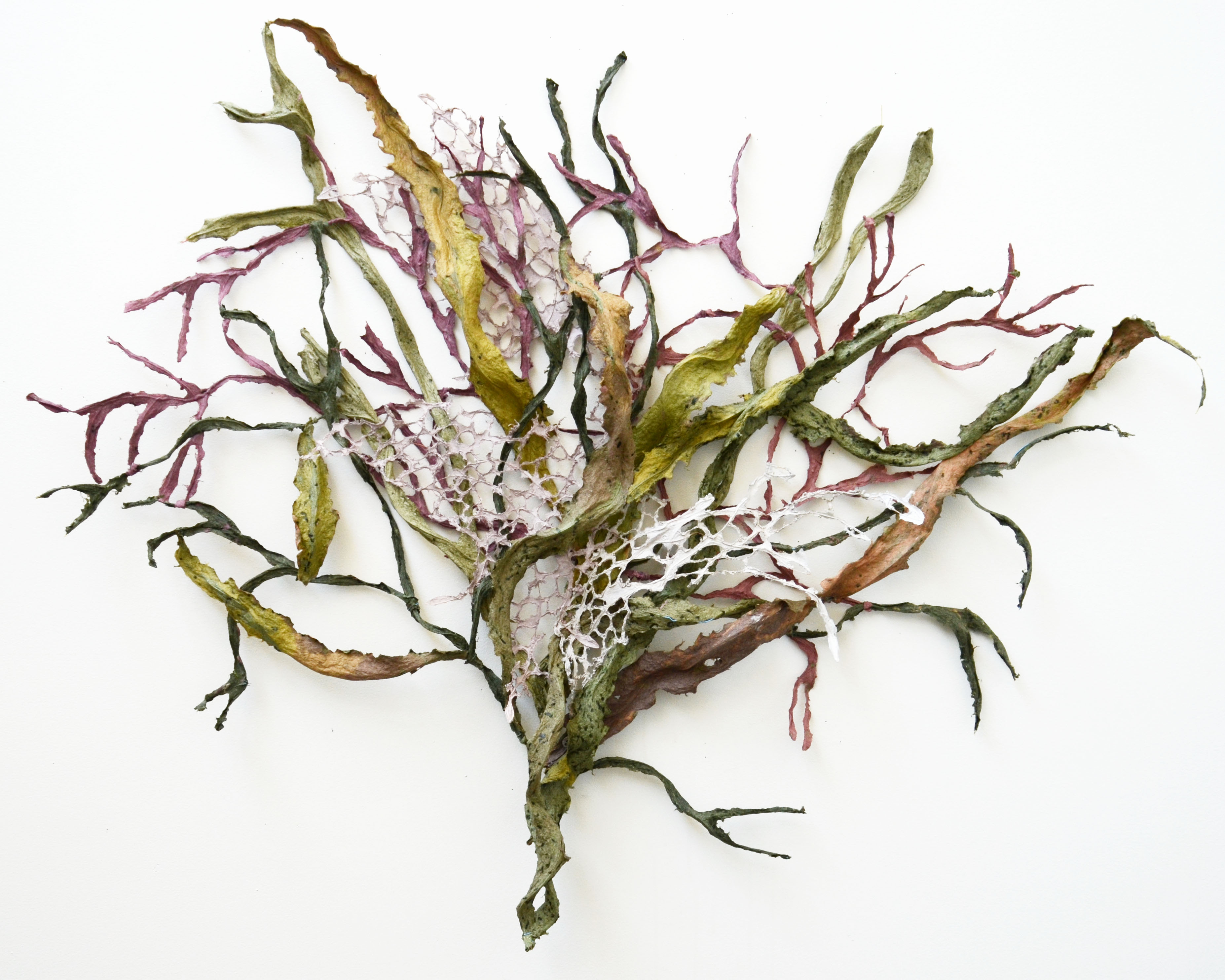
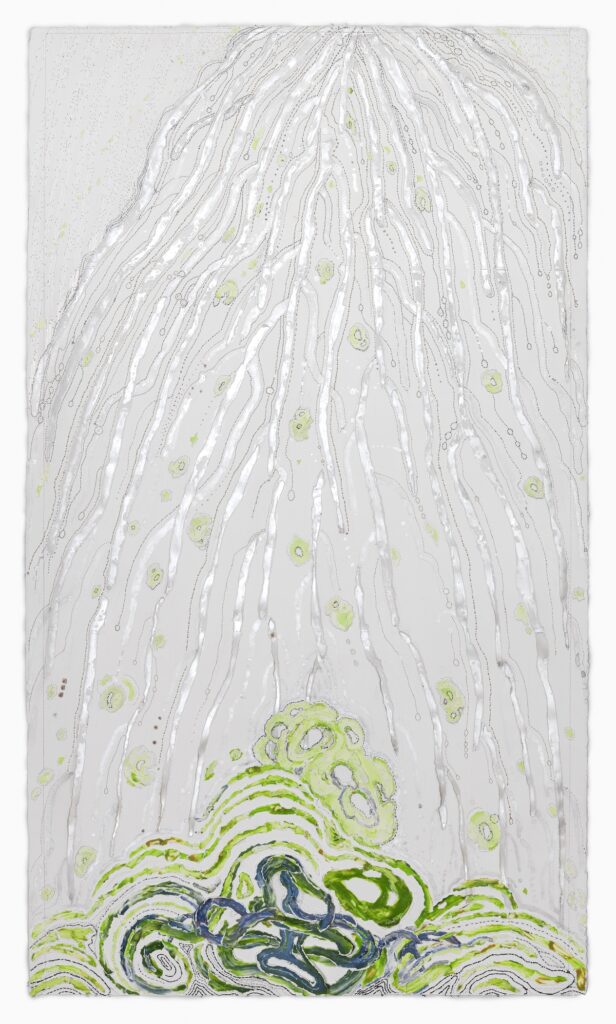
Providence based artist May Babcock (b. 1986) is an eco-centric artist that creates paper works and sculptural forms from natural materials she sources from local environments. Her masterfully crafted works are rooted in place and reflect the texture, color, and sometimes shape of the grasses, sediment, and fiber she collects and manipulates. In her most recent body of work, on view at the New Bedford Whaling Museum in November of 2026, she creates a collection of “new ecologies” constructed from natural sites around southern New England.
“I wander rivers and coastlines, observing novel plant communities surviving in distressed lands and waters. Collected fibers and sediment turns into paper pulp, which coats discarded electrical and internet communication wire. I make many small, abstract sculptures of plant forms and water.
With no planning or preparation, and in stream of consciousness, I spontaneously compose these smaller elements into wall sculptures, amalgamations. This act of discovery and connecting reflects the growth of novel relationships—New Ecologies emerging out of collapsing systems.”
Bio:
I’m May Babcock, a papermaking artist using natural materials in New England. I grew up in rural Connecticut surrounded by forests, rivers and ponds, and vegetable and flower gardens. I received scholarships to attend the University of Connecticut for a BFA in painting and printmaking and went to Louisiana State University for my MFA and to learn papermaking.
As a biracial artist of Taiwanese-Chinese descent I never felt like I belonged. Exploring specific sites is a search for belonging, plant fibers, and connection with place.
Proteanna: Susan Heideman
New Bedford Whaling Museum
May 29 - November 2, 2026
Center Street Gallery
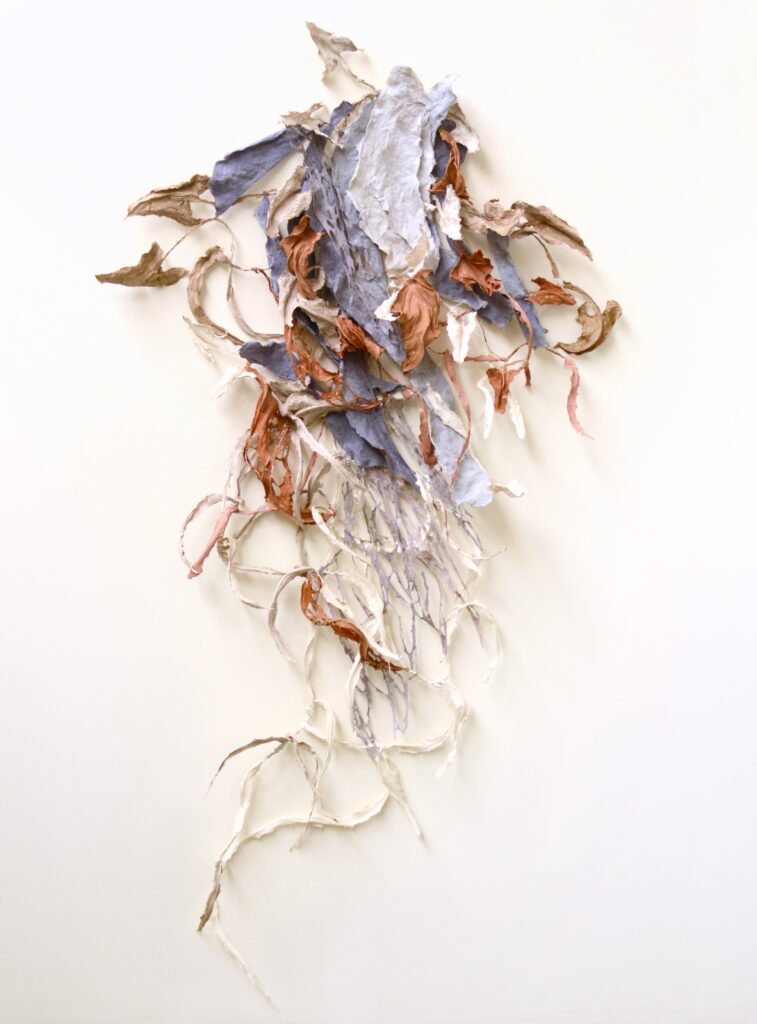
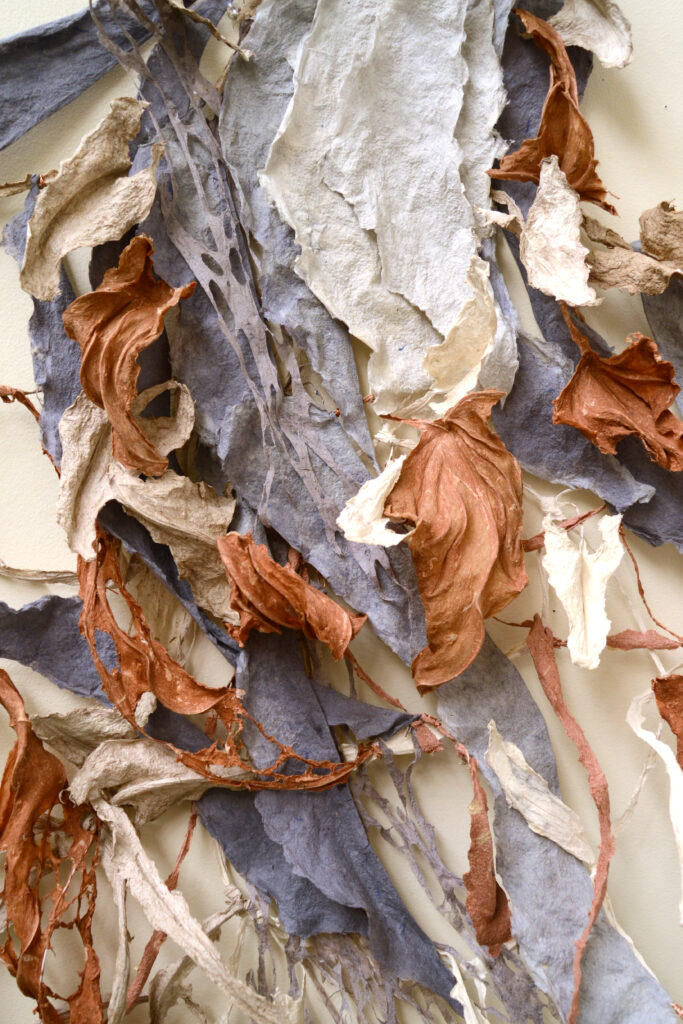
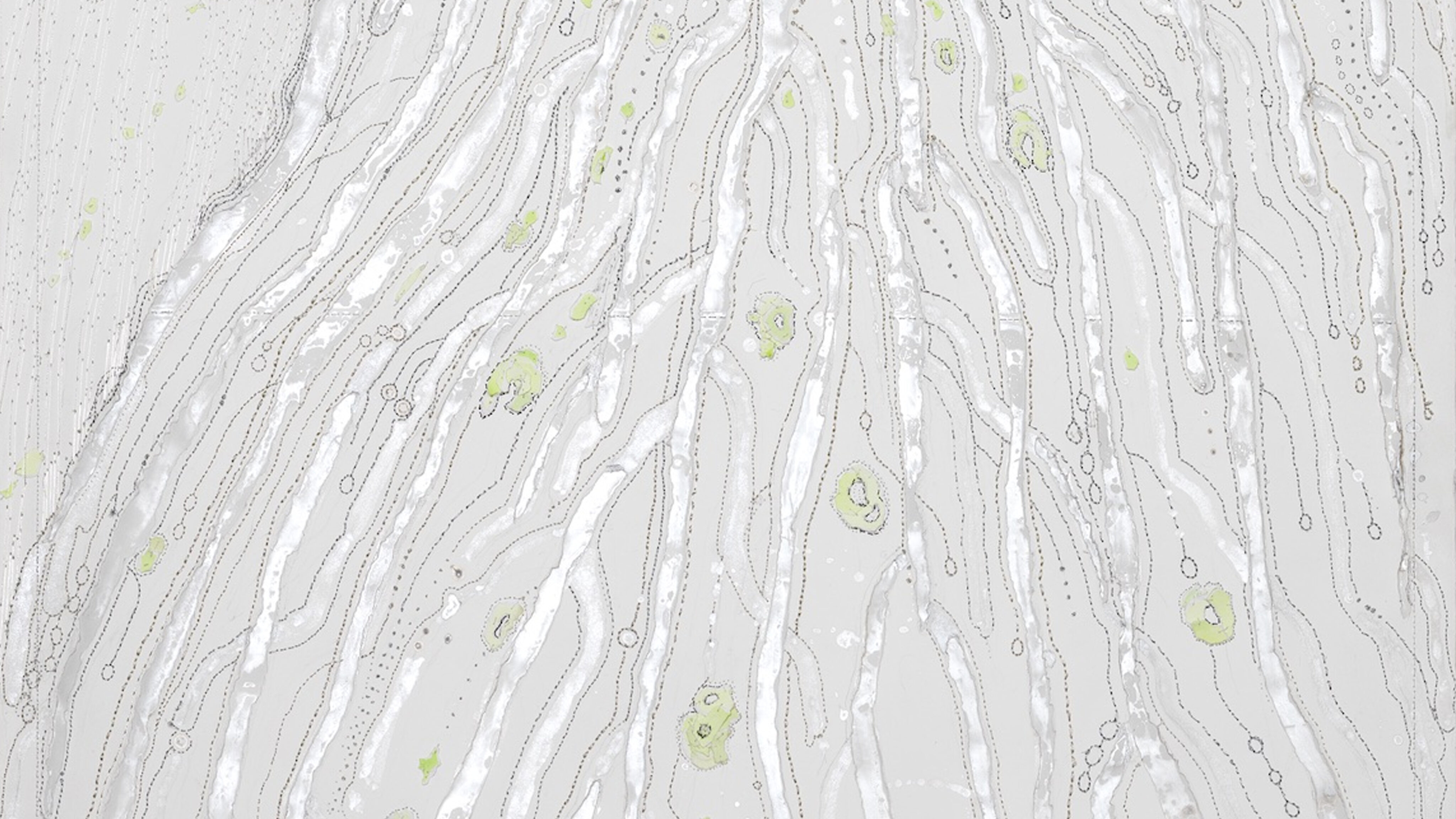
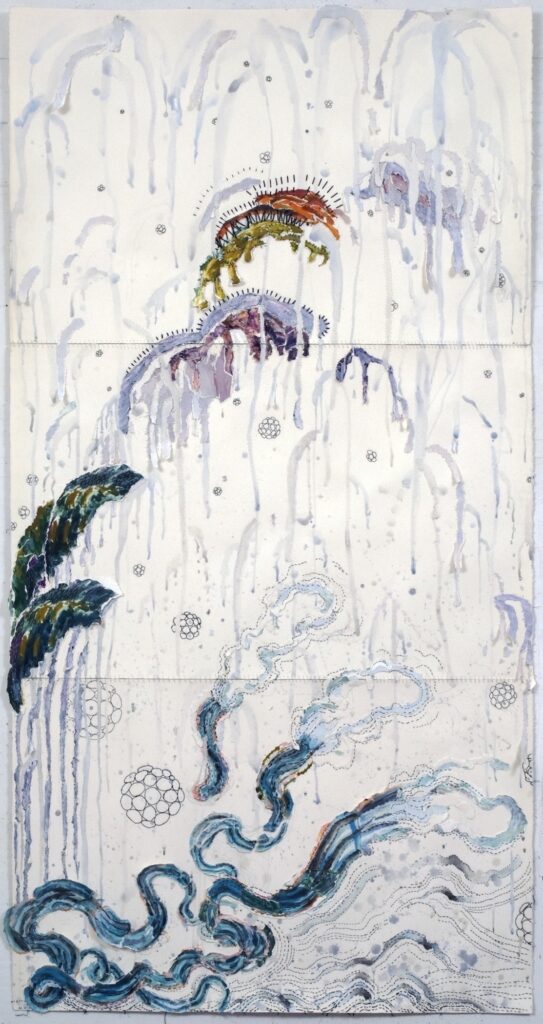
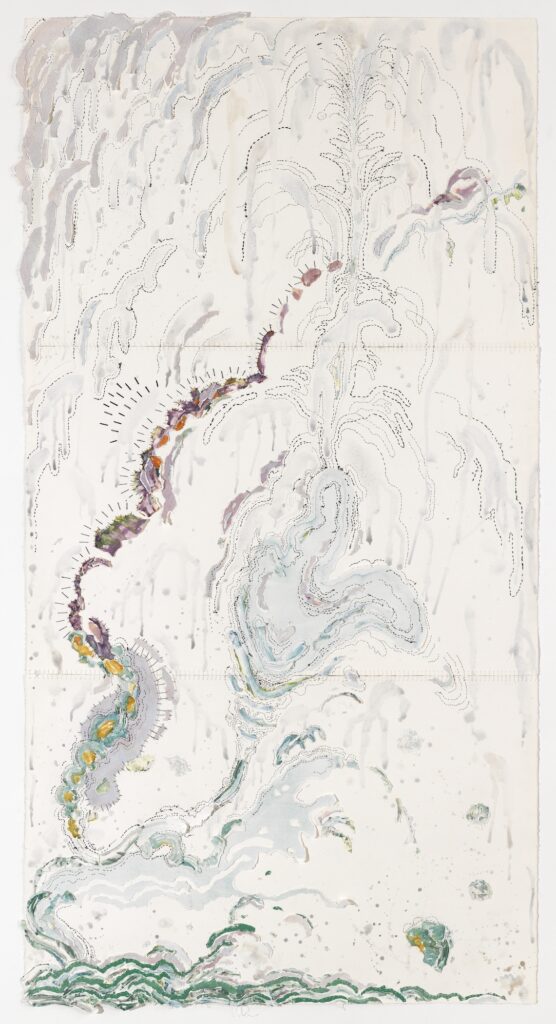
Artist Susan Heideman (b. 1950) has explored bio-morphic shapes of the ocean’s “in-between entities” for nearly twenty years in her Proteanna series and beyond. The real and imagined floating, aqueous shapes of her work evoke the forms of invertebrate creatures that often remind us of primordial beings living in the depths of the sea.
The colorful hand embroidered large scale works that define the Proteanna series are “hybrid” in nature and include a mix of older works combined with newer paintings and constructions. The texture and layering create an almost three-dimensional experience that transport the visitor into a wondrous underwater world of possibility.
Artist Statement:
In 2006 the Proteanna Series began with an experiment. For the first time, using black embroidery thread, I tried stitching imagery into an existing watercolor I’d always felt lacking. The piece seemed to come alive. Suddenly the idea of combining stitching, watercolor and other aqueous media on larger sheets of thick watercolor paper had become entrancing. I began tearing up random, ragged fragments of my old monotypes and stitching them onto the paper. I continued stitching, painting, and layering, attaching collaged pieces strictly through stitching. This was the beginning of the ongoing Proteanna Series. I coined the word “proteanna,” derived from the word “protean,” to suggest entities and their situations straddling and crossing taxonomies, mutating beyond classification. The process is as improvisatory as nature; forms develop, morph, and reconstitute. Fragments get sewn atop fragments, creating relief surfaces that stratify. Might my grafting and hybridizing processes be likened to nature’s own irrepressibly continuous transforming?
Bio:
Heideman is a Smith College Professor Emerita who taught painting and drawing within Smith’s Art Department for thirty-six years. During that time, she maintained her studio practice in Boston; she continues to work and live in Boston since retiring. She has works in the following permanent collections: Smith College Museum (several pieces);
Danforth Museum of Art at Framingham State University; Rose Art Museum of Brandeis University; Boston College’s McMullen Museum of Art; DeCordova Museum and Sculpture Park; Boston Public Library Collection of Prints and Drawings (multiple pieces); and The William and Uytendal Collection of Works by Women Artists at Bryn Mawr College. Her works are also represented in numerous corporate collections. She has shown up and down the East Coast and New York City in commercial galleries, non-profit galleries, and museums.
Bristol County: Incarcerated
New Bedford Whaling Museum
October 24, 2025 - December 2026
As the original seat of Bristol County, Taunton held the first “gaol” (jail) in our county, which opened in 1749. After complaints from southern towns within the County about the distance to get to Taunton, New Bedford was granted a “half-shire” status. In 1829 the New Bedford Jail on Court Street opened (currently the Civil Processing building), with the New Bedford House of Correction opening soon after. The Ash Street Jail construction began in 1888 with 287 cells, completing a corrections complex that now fills a city block. The Ash Street Jail became the primary center for housing prisoners within Bristol County for most of the 1900s. Still operating today under the management of the Bristol County Sherrif’s Office, Ash Street Jail claims the moniker of the oldest continuously operating jail in the nation.
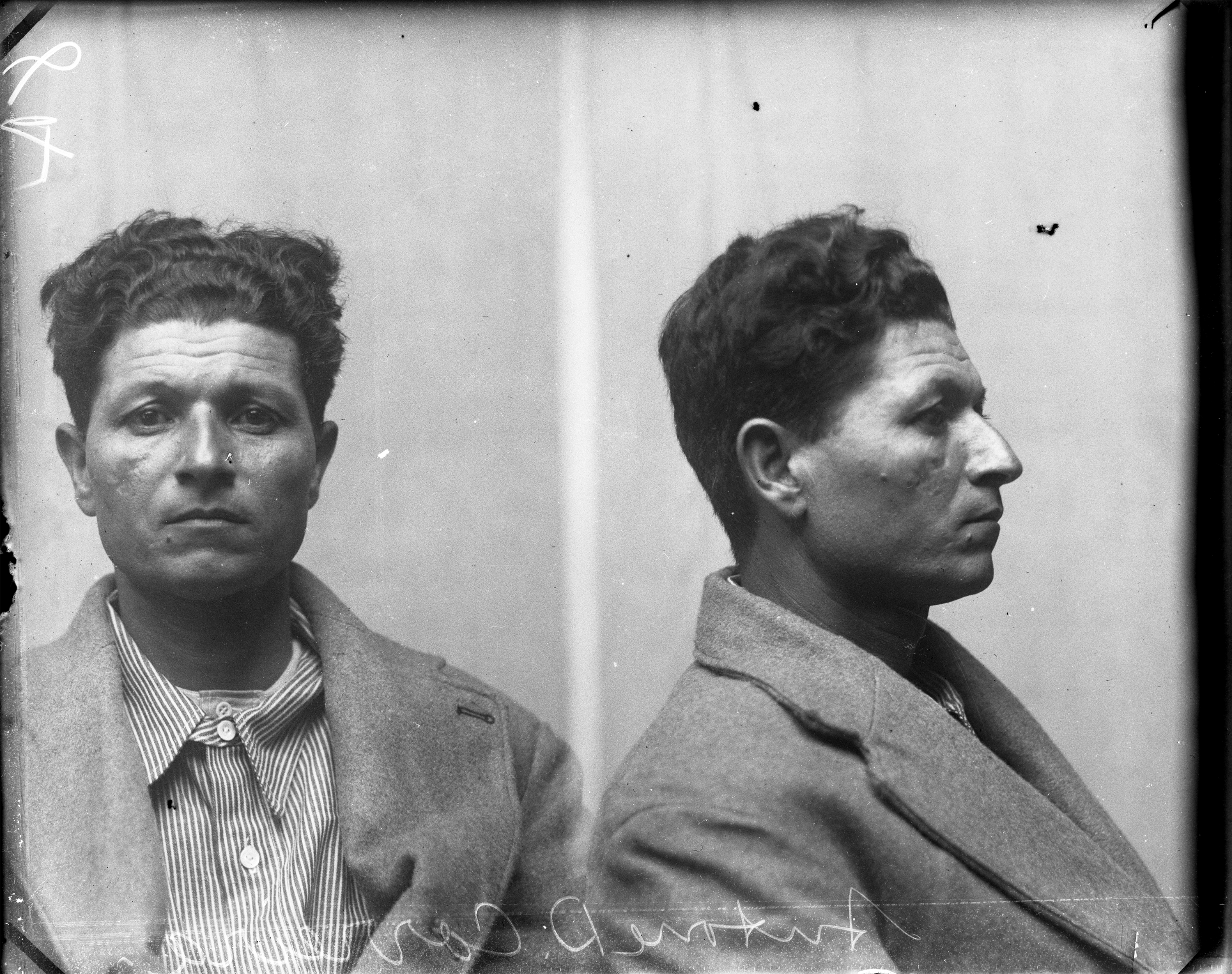
Bristol County: Incarcerated features items related to life in the Ash Street Jail, both for its residents and its employees, and those related to Bristol County’s history of incarceration. In this exhibit you can see the Taunton gaol’s book listing debtors as early as 1785, ledgers and logs dating to the 1890s of daily activities at the Ash Street Jail, Lizzie Borden’s mittimus in 1892, photos of people booked into Ash Street Jail in the 1920s, and a patch representing an anti-suicide inmate support service program run in the late 1990s. In 2023, the Bristol County Sheriff’s Office donated an estimated 6,700 negatives and thousands of more photographic prints of intake photos from the early 1900s to the New Bedford Whaling Museum. Recently, BCSO has lent the museum materials from its own archives to be available to researchers and exhibited at the museum.
Local jails, county- or city- run facilities where a majority population is awaiting trial, play a critical role as “incarcerations front door.” Being in jail does not indicate guilt. The majority of people in jails today cannot afford to pay the bail set to secure their release pre-trial. This further criminalizes people from under-resourced communities. The United States has the highest incarceration rate of any independent democracy on Earth and every single state in the country incarcerates more people per capita than most nations. In 2022, across the country, about 469,000 people entered prison gates, but people went to jail more than 7 million times. In 2022, about 469,000 individuals entered prison and over 7 million people went to jail. As of October 2025, there are 118 individuals incarcerated at the Ash Street Jail, 87 are pre-trial.
Coquilla Nut Carvings: An Afro-Brazilian Artform
New Bedford Whaling Museum
Scrimshaw Gallery Annex
September 20, 2025 – August 30, 2026
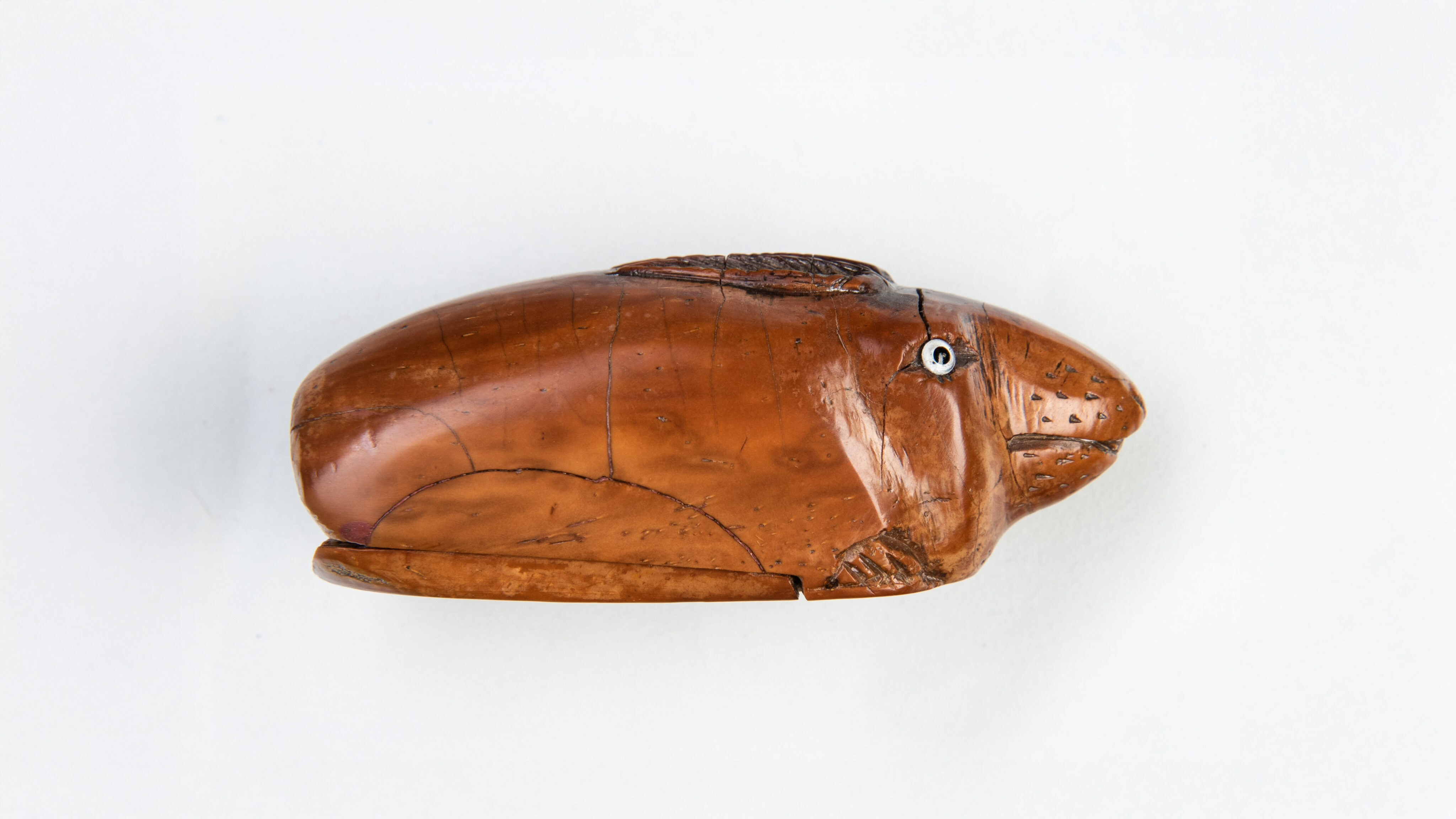
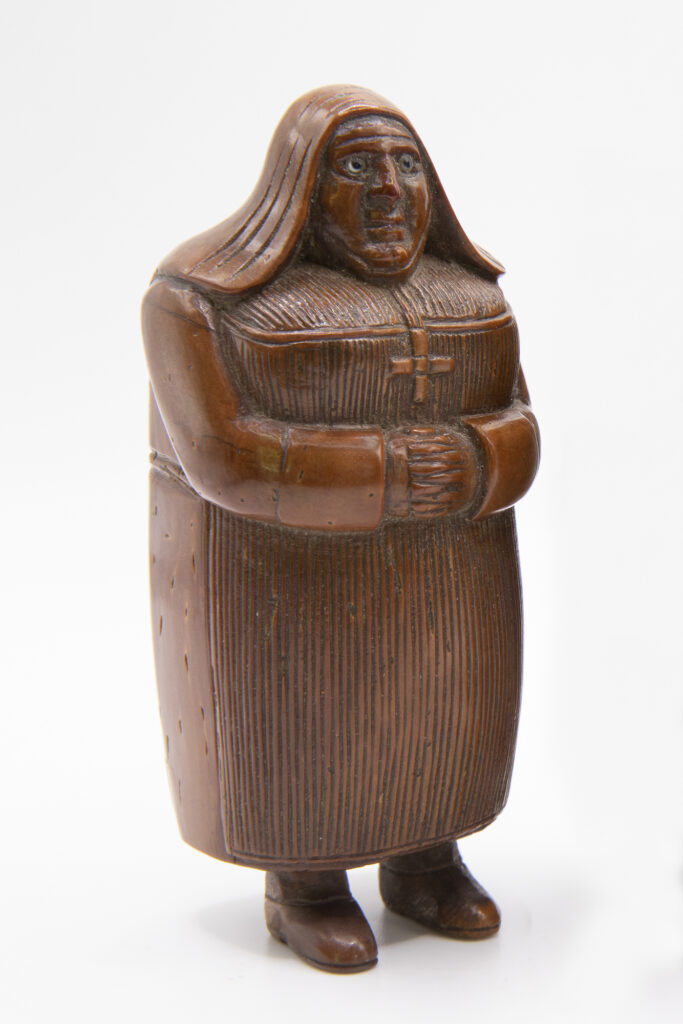
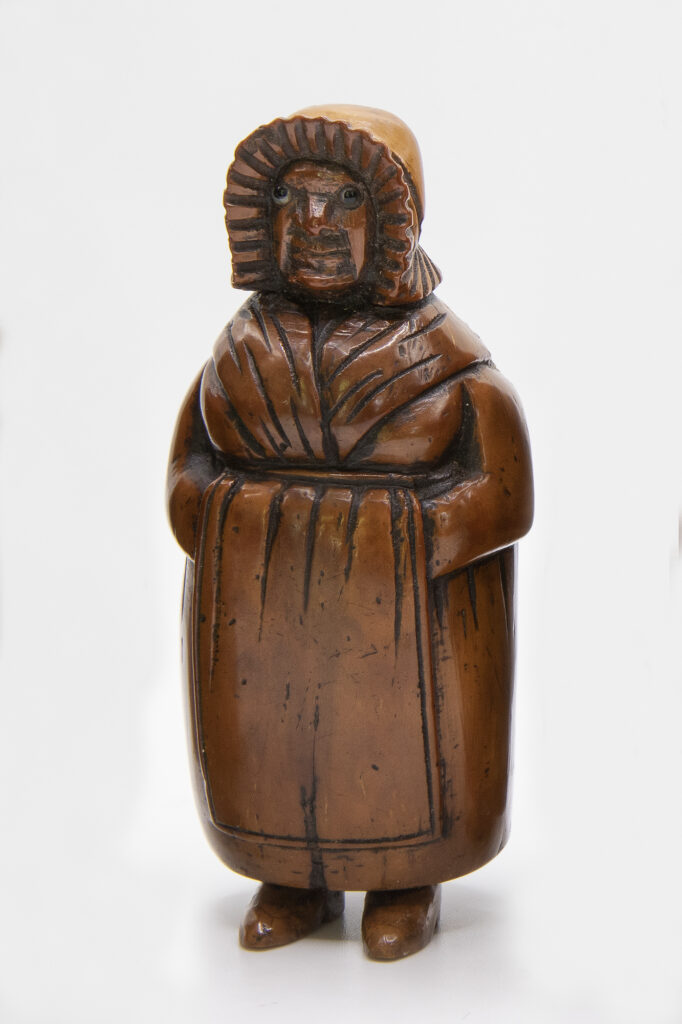
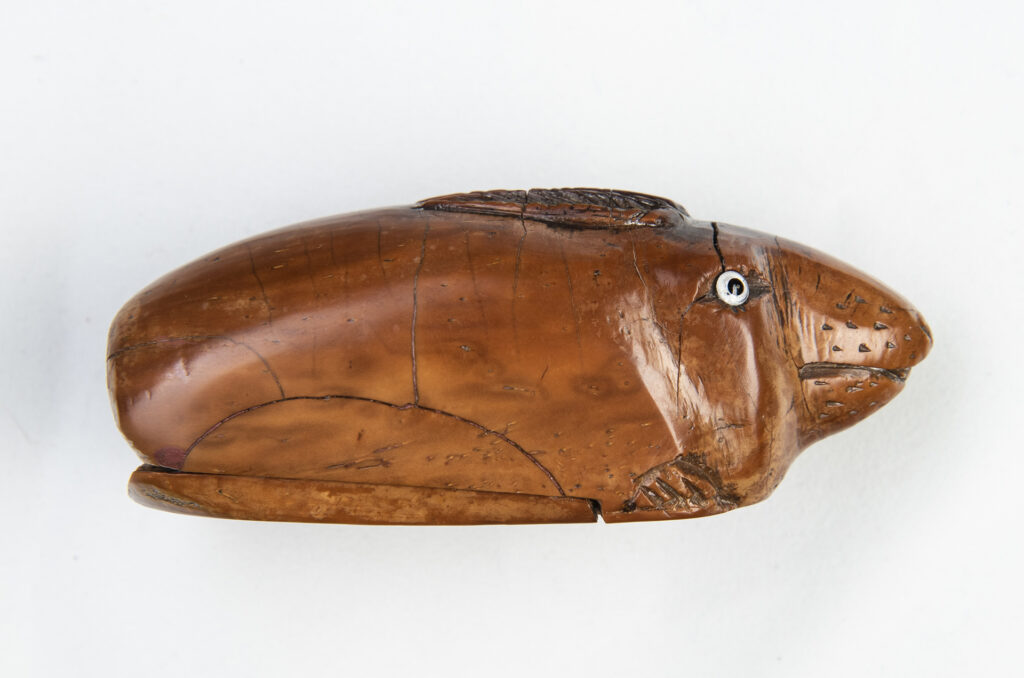
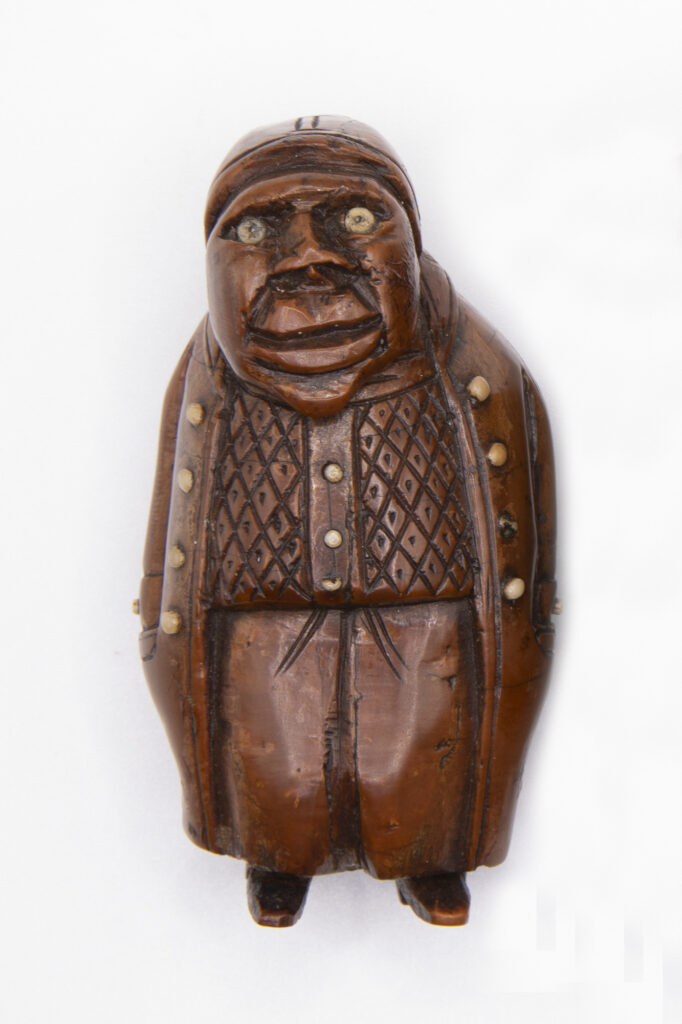
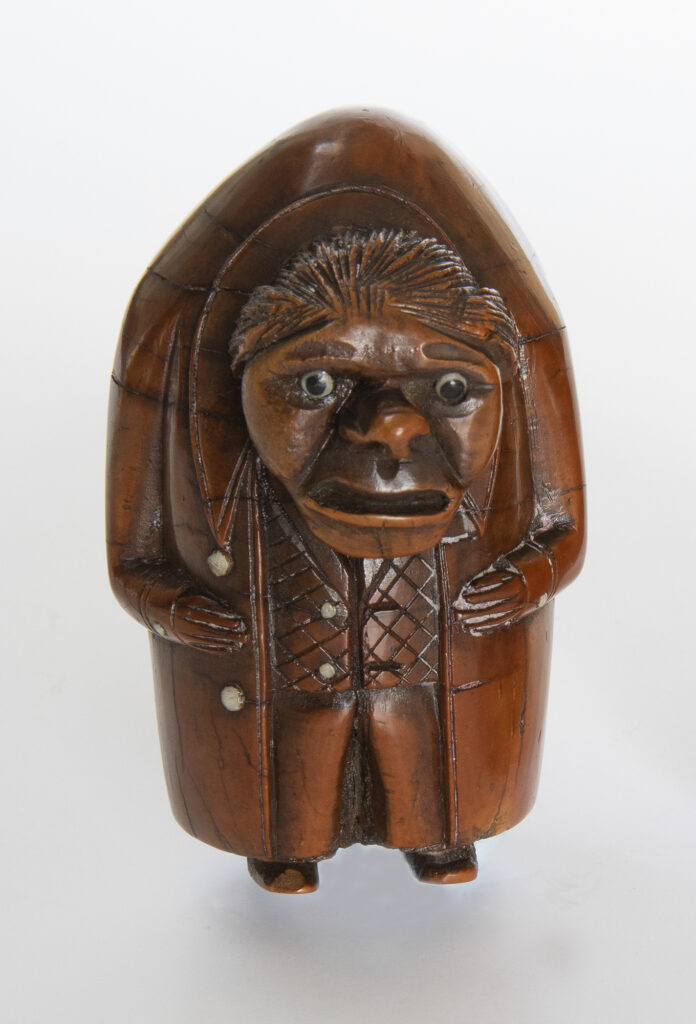
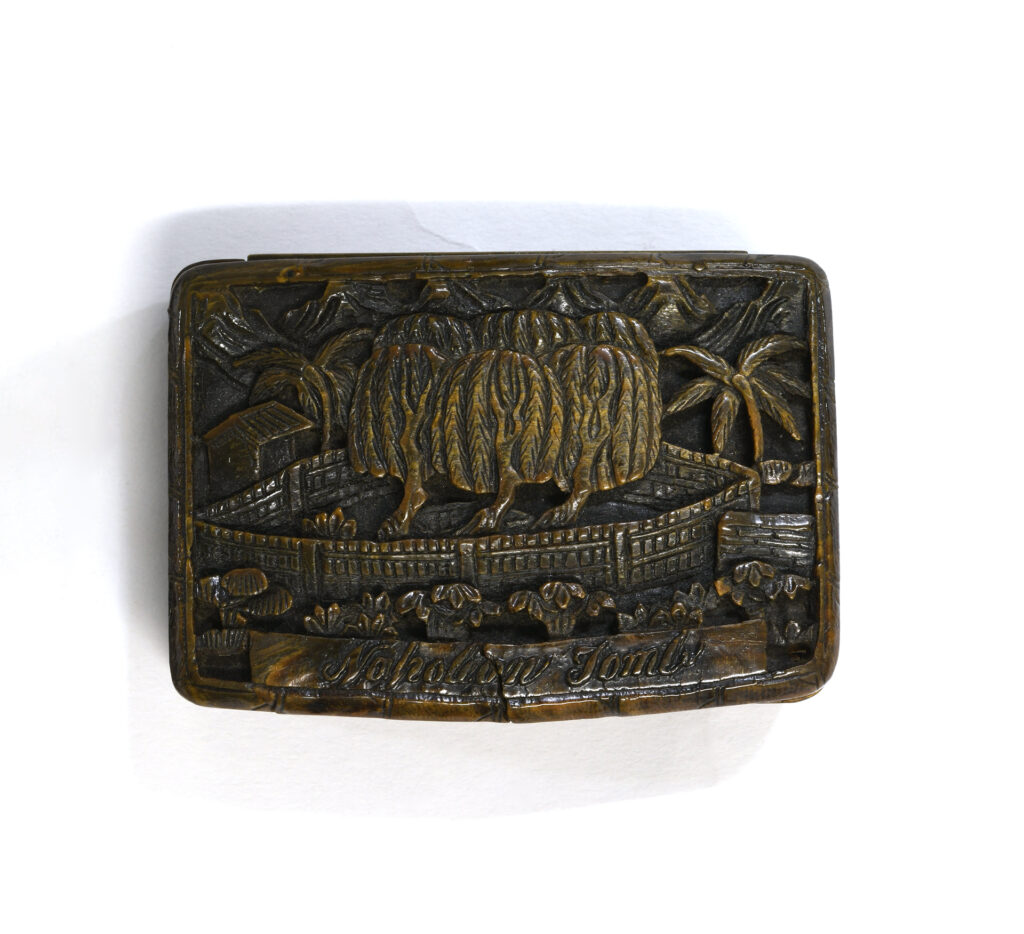
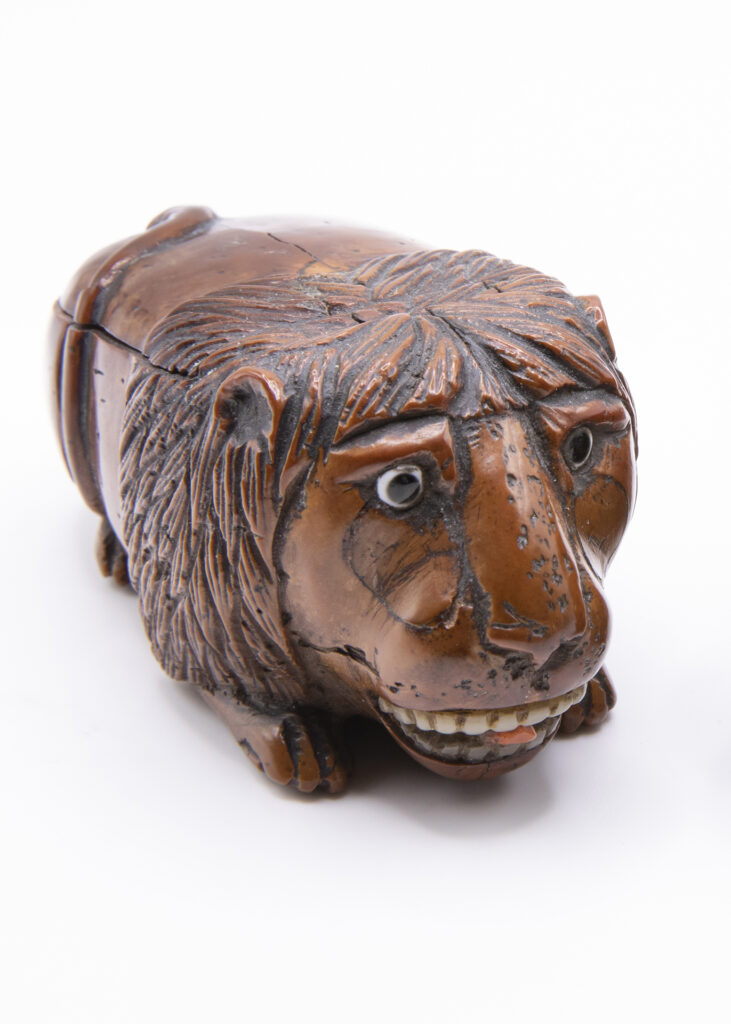
Small carved coquilla nut miniature snuff boxes were a distinctive vernacular tradition in the 1700s and 1800s in the Black Atlantic. Most of these tiny treasures are unattributed, meaning we don’t know who carved them. Evidence suggests some were made on shipboard during maritime voyages between Brazil and America, England, and Europe. A few are inlaid with marine ivory (whale teeth). Slavery was still legal in Brazil, and Brazilian crews were racially diverse. Over 25 examples from a private collection demonstrate the artistic contributions of Black mariners in the Atlantic world. These miniature sculptures reveal the breadth of this unique art form, forged under colonial pressures spanning slavery, Portuguese colonization, maritime labour networks, and extractive capitalism. They bring new insight into the creative expression of mariners from Brazil and the Afro-Caribbean in the 1700s and 1800s and speak to cultural and material exchange and the rich maritime networks of production for decorative arts, that included scrimshaw.
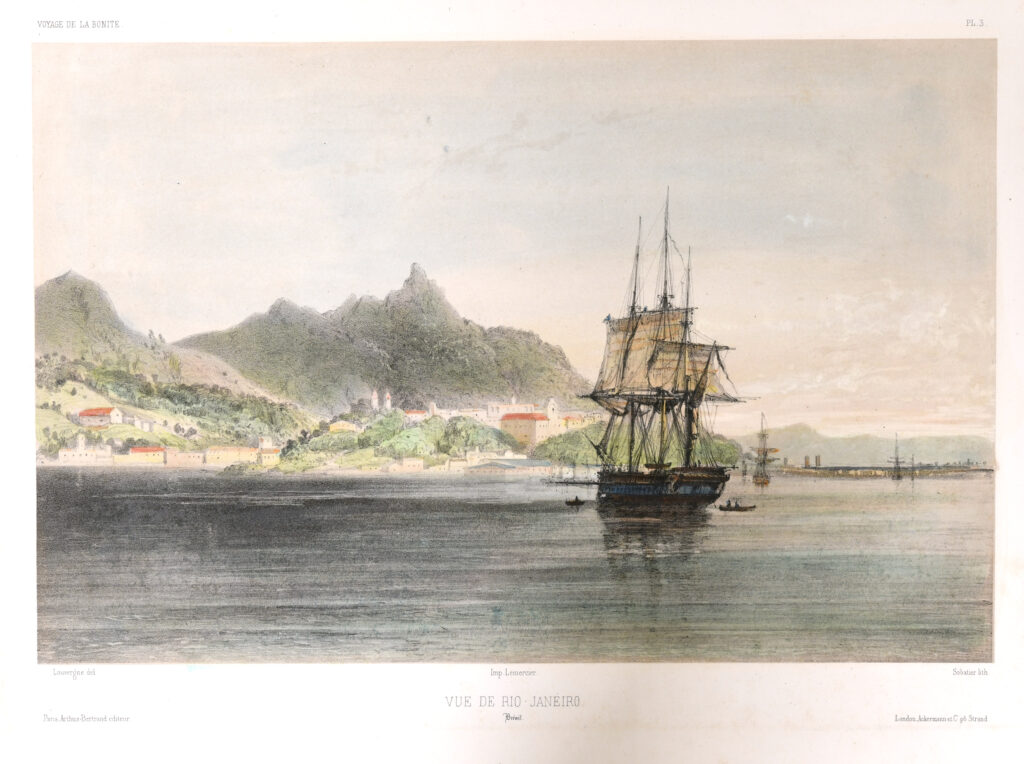
This exhibition is made possible through a one-year loan from the David Badger collection of Coquilla Nut Snuff Boxes and Bottles, McLean, Virginia, comprising over 700 examples. The snuff boxes are joined by a selection of items from the NBWM collection that highlight Brazil’s centrality within maritime networks of the 1800s. This project perfectly fits with NBWM’s mission, highlighting diverse maritime experiences, connecting maritime carving traditions like scrimshaw with related forms, and expanding our viewpoint on the lusophone world.
Remember: Volver a pasar por el corazón
New Bedford Whaling Museum
Coming Fall 2027
Upcoming Workshops
March 12th | 4:00-6:00pm
AHA Night! | New Bedford Whaling Museum
18 Johnny Cake Hill, New Bedford
May 14th | 4:00-6:00pm
AHA Night! | New Bedford Whaling Museum
18 Johnny Cake Hill, New Bedford
October 8th | 4:00-6:00pm
AHA Night! | New Bedford Whaling Museum
18 Johnny Cake Hill, New Bedford
Past Workshops
July 26th | 2:00-6:00
El Patio de Comidas Festival | CEDC New Bedford
235 N. Front Street, New Bedford
August 9th | 2:00-6:00
El Patio de Comidas Festival | CEDC New Bedford
235 N. Front Street, New Bedford
October 9th | 4:00-7:00pm
AHA Night!: Tunes, Treats, and Creative Streets | New Bedford Whaling Museum
18 Johnny Cake Hill, New Bedford
Stay Tuned for more Workshops!
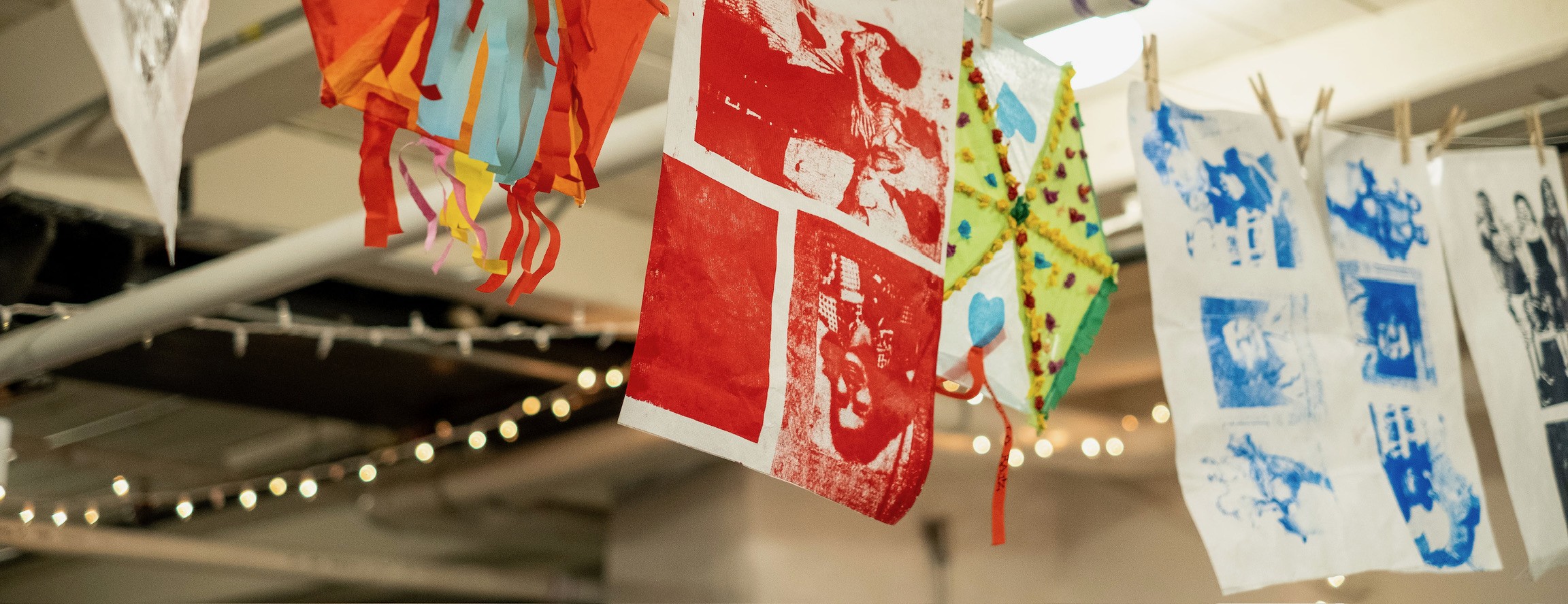
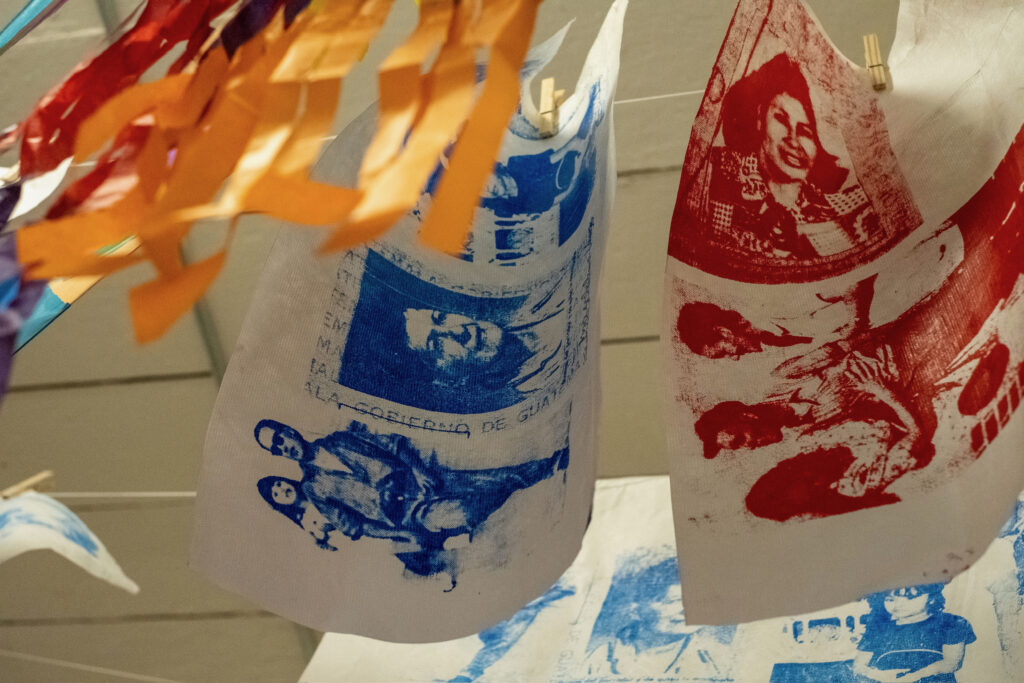
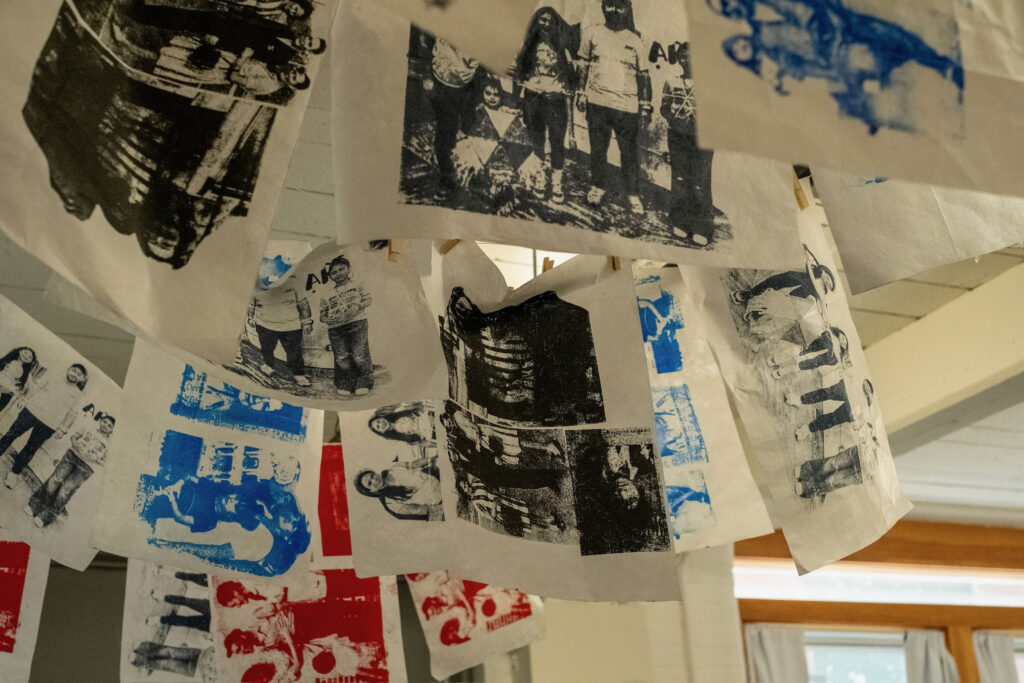
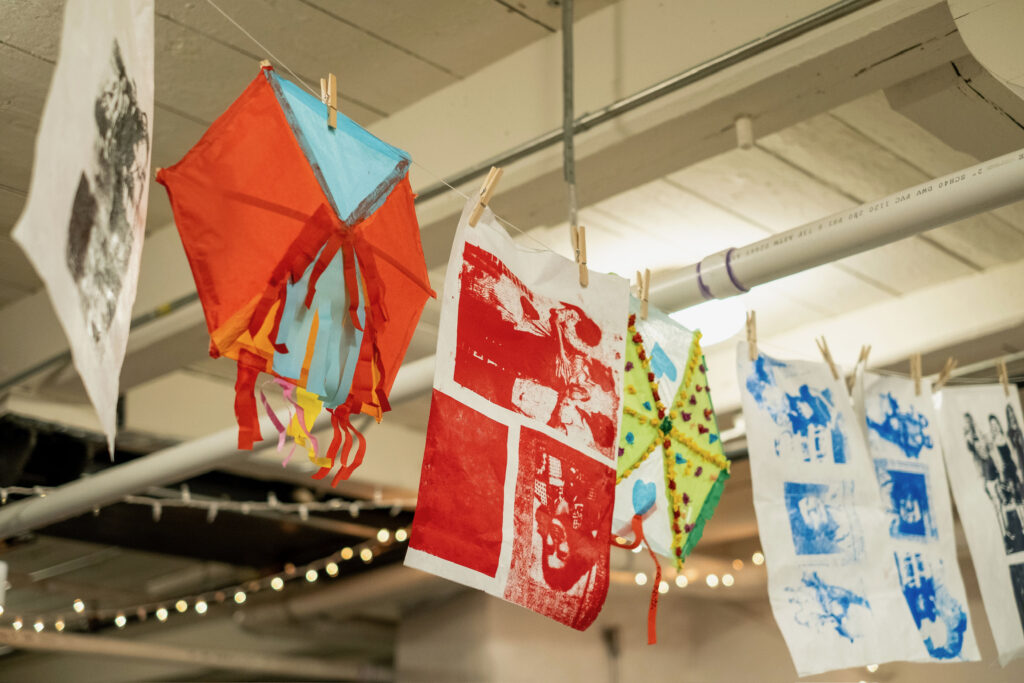
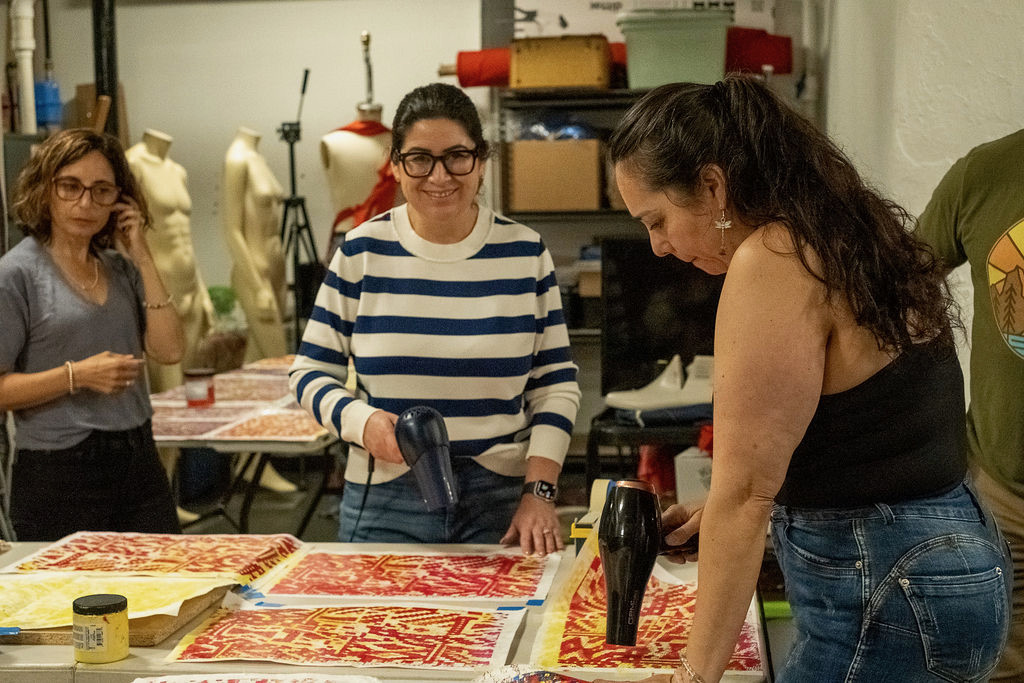
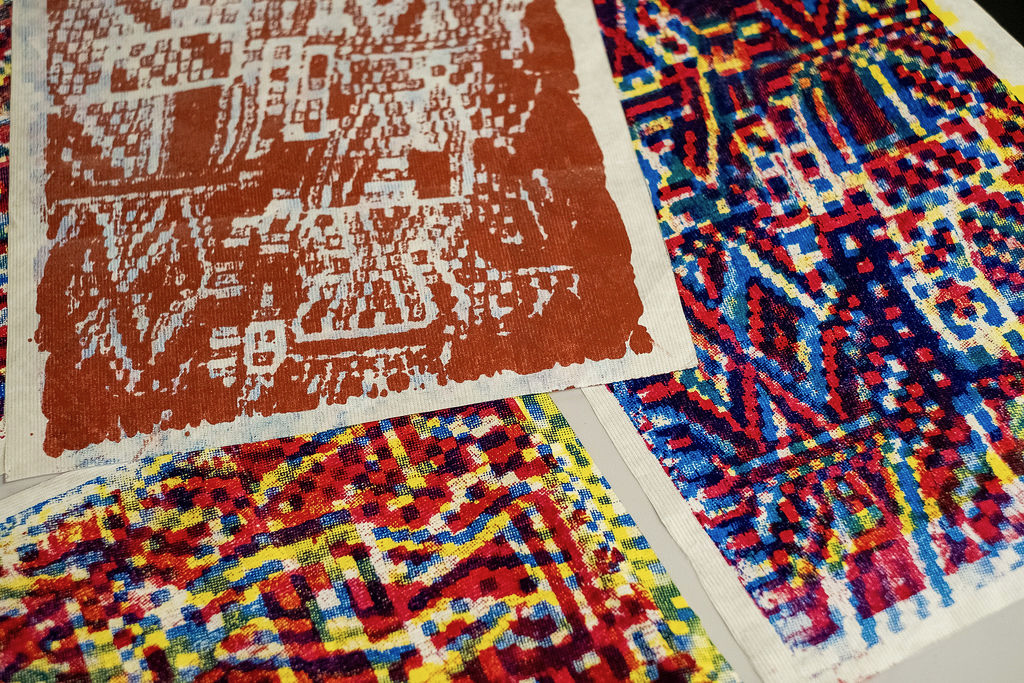
Many of the kites made in the workshops will be on view alongside other artworks, personal stories, and installations by multi-media artist Magda Leon at the New Bedford Whaling Museum in the fall of 2027. The project celebrates the histories and experiences of the Guatemalan community in the greater New Bedford area and Southcoast---drawing connections between ancient communal practices and contemporary experiences of migration, exploring the universal pursuit for belonging and community.
This 2027 community-focused exhibition is part of a larger multi-year exploration of migration and community in New Bedford and the foundational labor and industrial histories of the region.
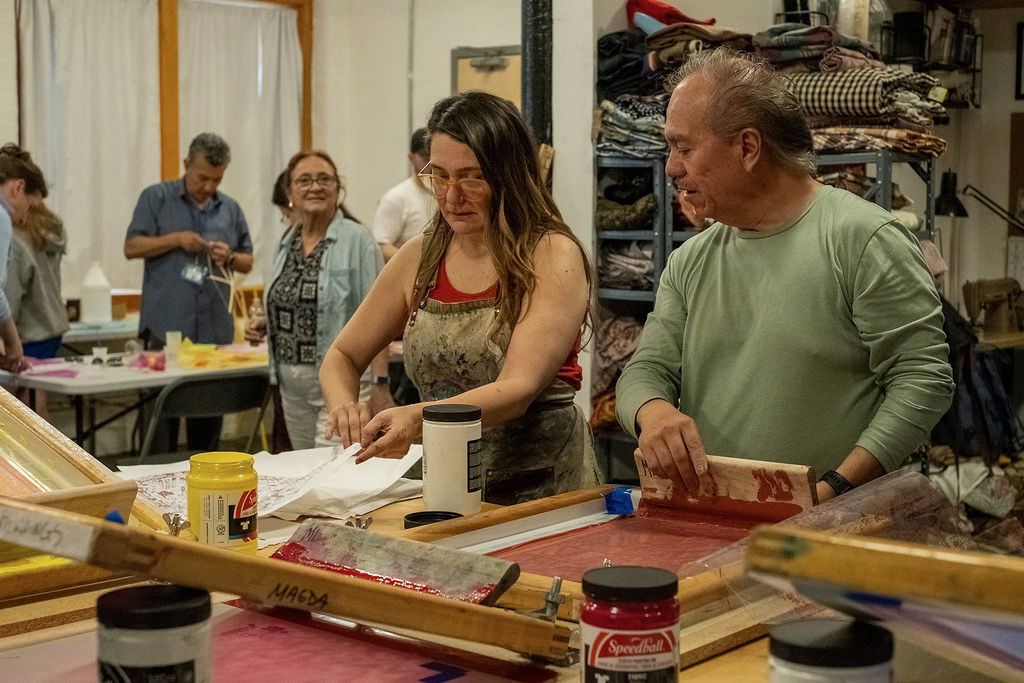
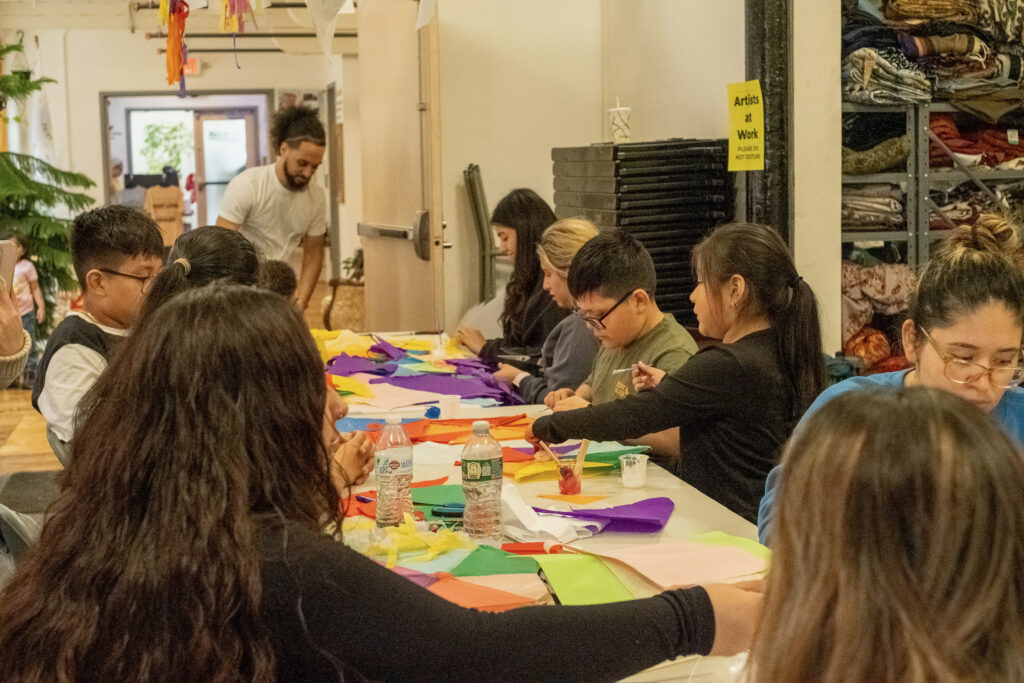
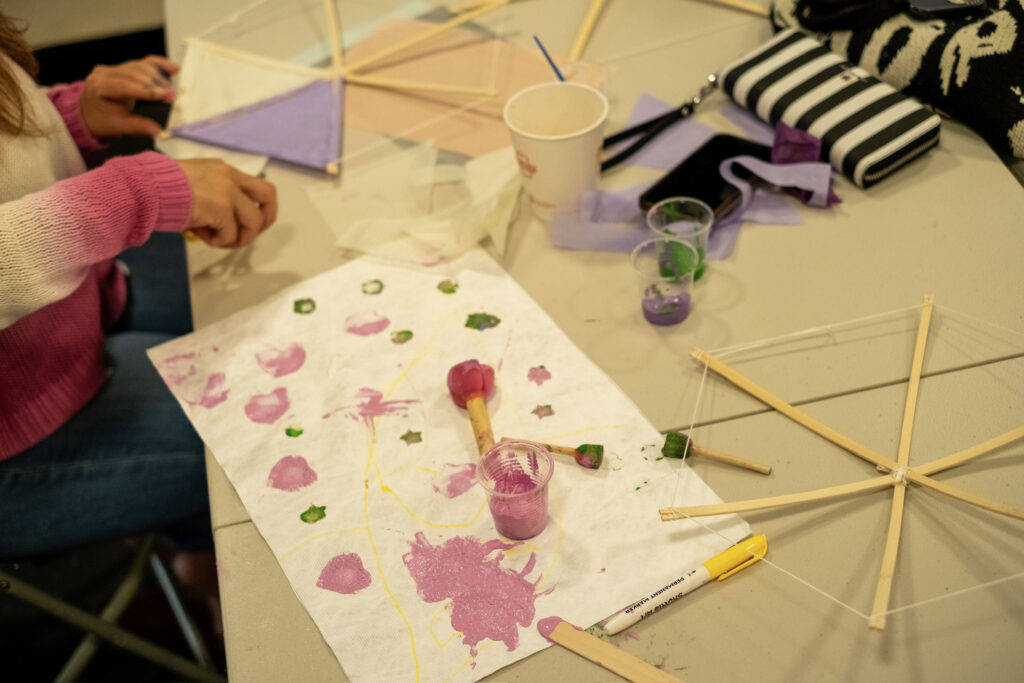
Giant Kite Making Community Workshops
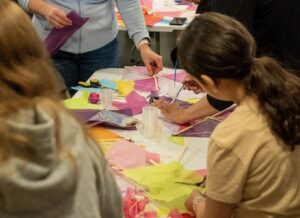
Come participate in a hands-on giant kite-making workshop with multi-media artist Magda Leon and the Guatemalan Center of New England. These giant kites, called barriletes, are inspired by a Mayan tradition from southern Guatemala where giant kites are crafted by the community throughout the year and flown in November to honor loved ones that have passed away.
Let’s build, laugh, share stories and celebrate heritage with color and creativity.
All are welcome!
BIOS
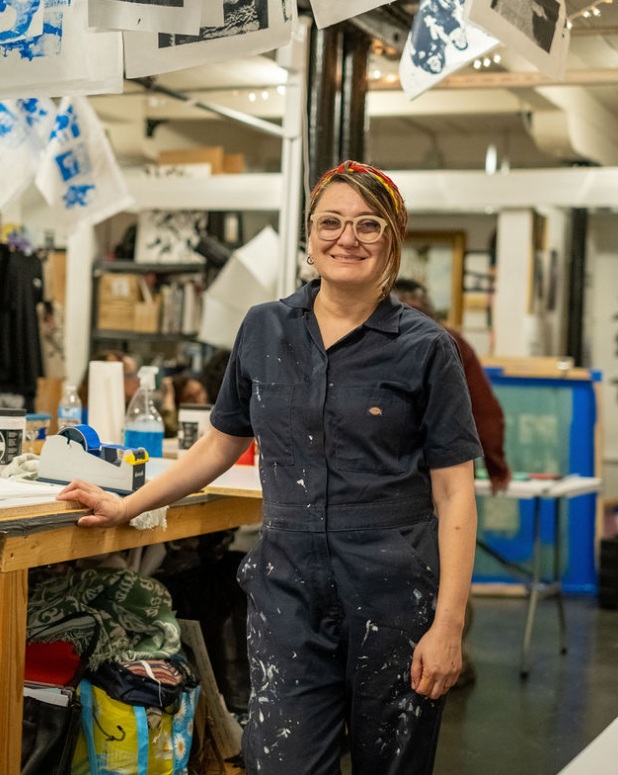
Magda Leon, a Guatemalan-born multidisciplinary artist currently residing in Providence, RI, focuses in printmaking, installation, and social practice art. Leon’s work reflects her bicultural identity, which she cariñosamente (lovingly) refers to as “De aquí y de allá”.
The Guatemalan Center of New England promotes and shares Guatemalan culture, establishes cultural connections between Guatemala and New England, and identifies and develops strategies to address the needs of Guatemalans in the region.
https://www.guatemalancenter.org/
Community Economic Development Center | New Bedford
Our CEDC seeks to create a more just local economy by building bridges to resources, networks, and cooperative action for new immigrants and working families to find their way to economic opportunity.
Photo Credit: Jenni Ugarte





Melting Glaciers, Rising Seas: William Bradford, Climate Change, and the Contemporary
New Bedford Whaling Museum
Coming Early 2027
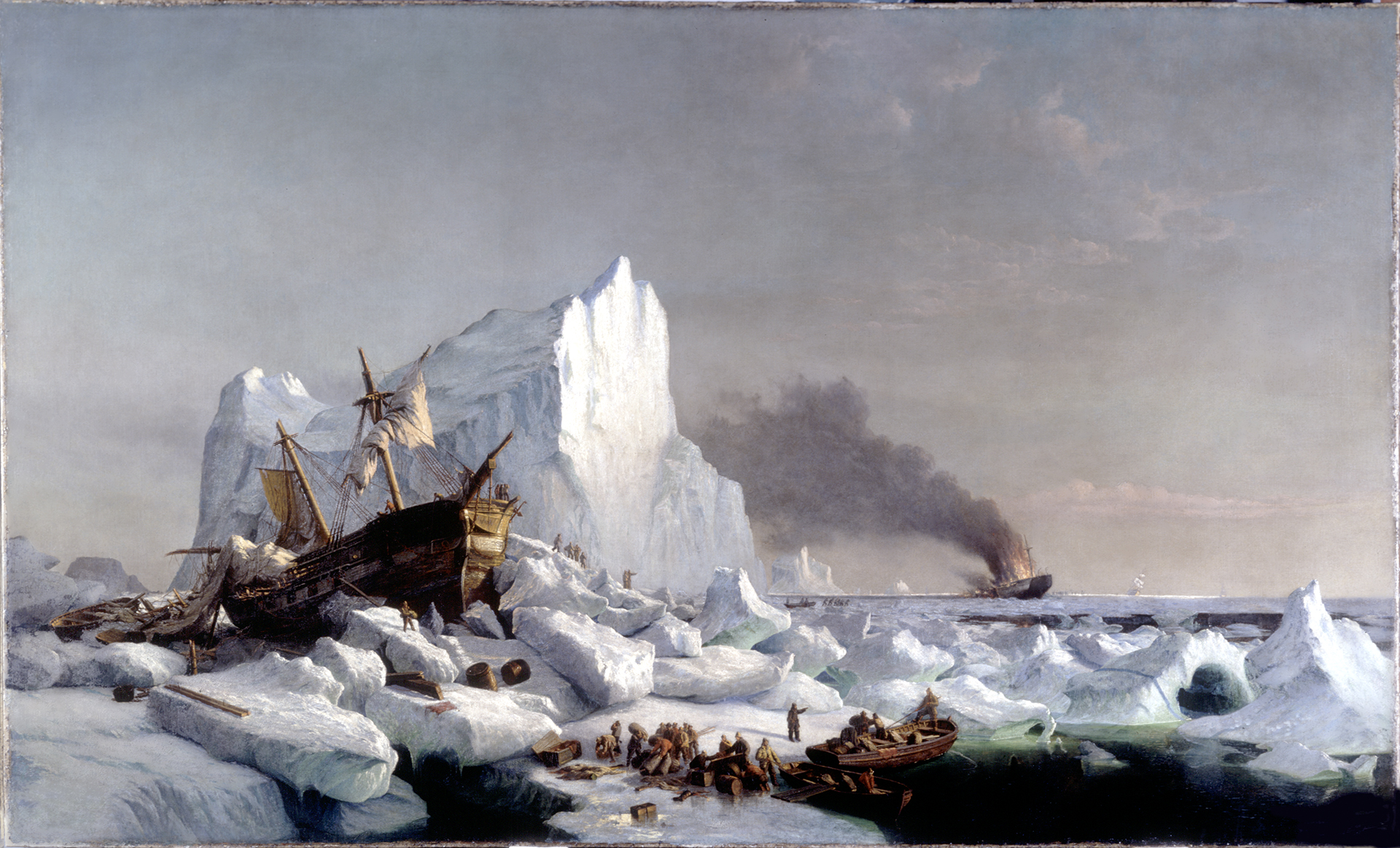
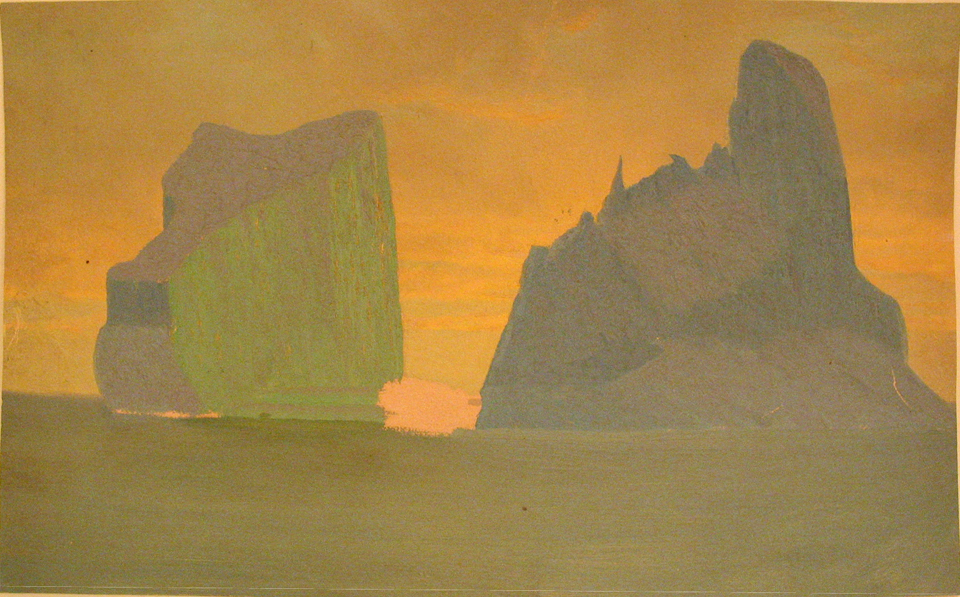
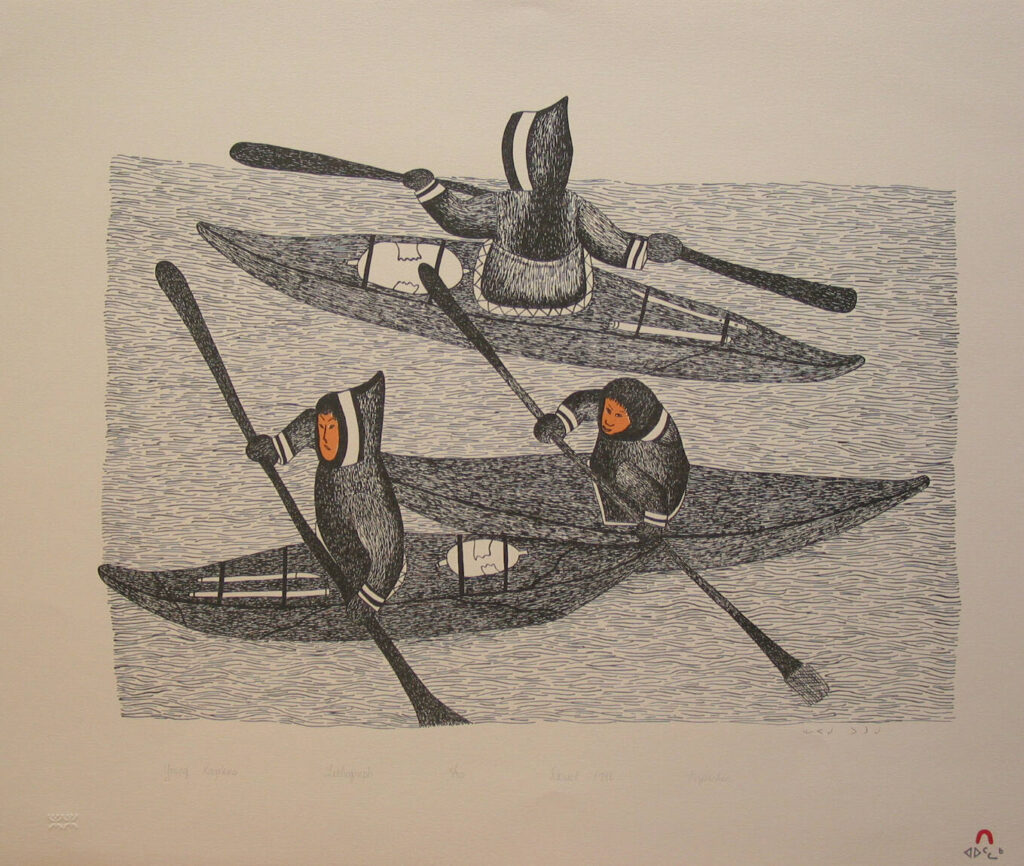
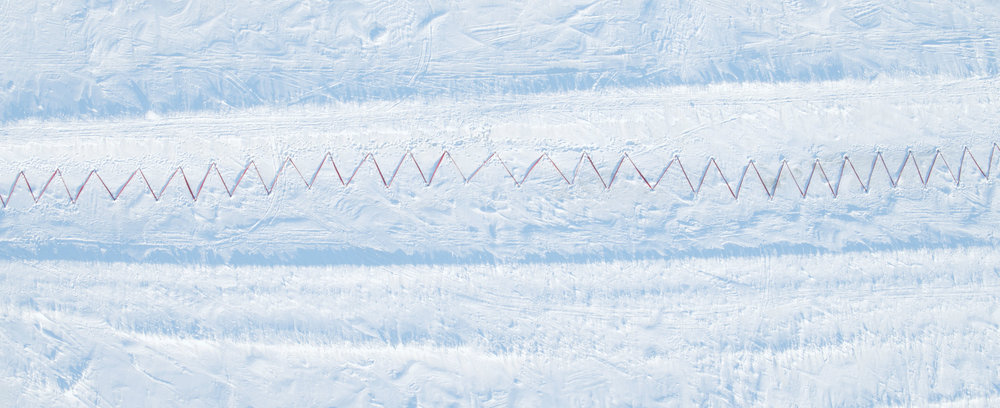
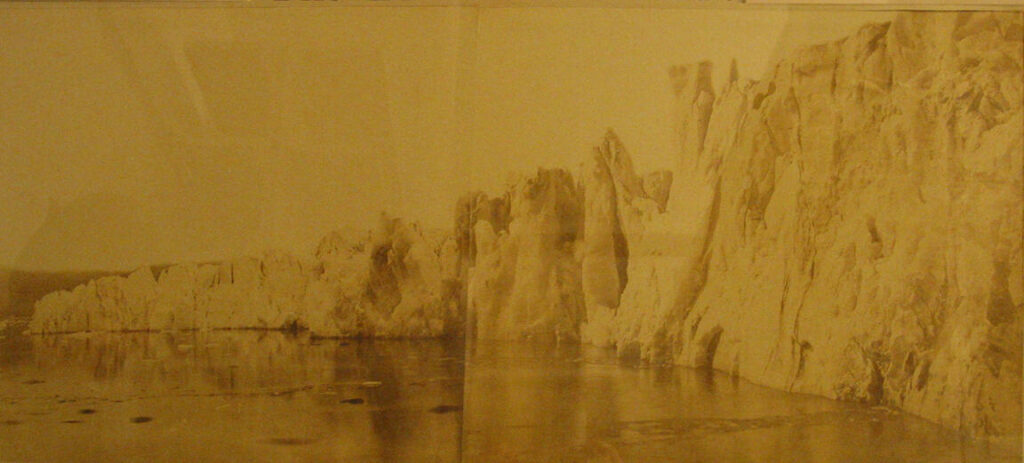
American artist William Bradford (Fairhaven, MA; 1823-1892) greatly expanded knowledge about the arctic through photographs, paintings, publications, and lectures. The exhibition and catalogue, Melting Glaciers, Rising Seas: William Bradford, Climate Change, and the Contemporary, situates Bradford’s work in conversation with contemporary art about climate change and Eastern Arctic Indigenous communities across Inuit Nunangat and Kalaallit Nunaat. Featuring 180+ artworks, the exhibit and publication offer a new critical framework for thinking about historical American art of the arctic, contextualizing Bradford’s journeys alongside contemporary art on climate change and Arctic lifeways, and forcing reflection on our shared futures.
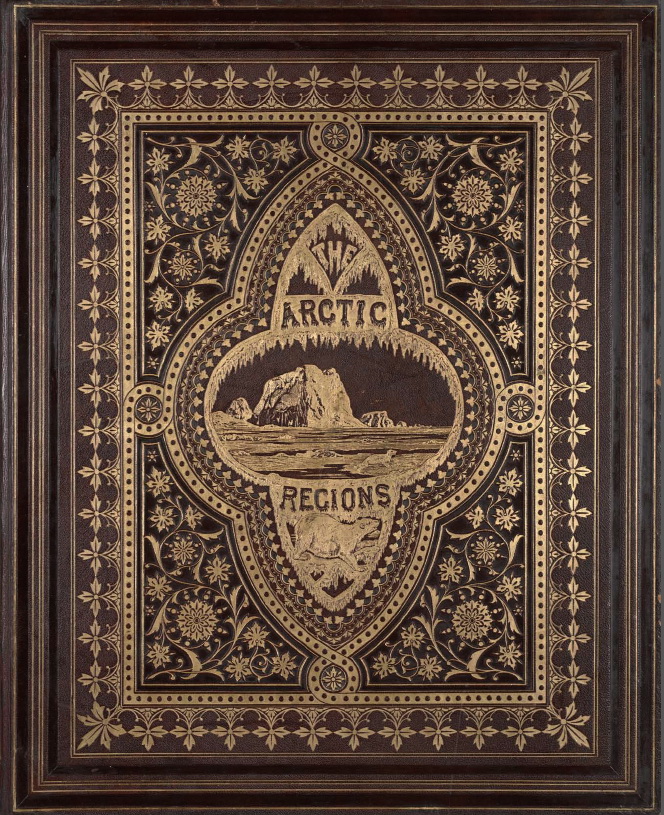
Bradford had four significant periods in his career: ship portraits, Dutch-inspired marine scenes, luminist works, and Realist arctic landscapes. In 1861, the artist traveled to Labrador (today the northernmost point of Northeastern Canada), returning annually between 1863 and 1867. These journeys inspired his monumental painting Sealers Crushed by Icebergs (1866; New Bedford Whaling Museum), depicting a crew of seal-hunting vessels overcome by errant ice and bringing attention to the awesomeness of the arctic environ. In 1869, he traveled to Greenland for an ambitious three-month expedition. They reached 75° north latitude, well inside the Arctic Circle, and created over 300 photographs, 50 oil sketches, and more than 100 drawings, from which Bradford produced numerous paintings. He published his account of the voyage in an oversized deluxe volume with 141 albumen silver prints as The Arctic Regions, illustrated with photographs taken on an art expedition to Greenland; with descriptive narrative by the artist (1873) and went on the public lecture circuit. The purchase of Sealers Crushed by Icebergs in 1872 by the Marquess of Lorne, Queen Victoria’s son-in-law, gained him royal patronage, a commission from Queen Victoria, and a public exhibition at the Royal Academy in 1875. These events established Bradford as the “Painter of the Polar World” and brought international acclaim.
The New Bedford Whaling Museum stewards one of the largest collections of work by William Bradford in the world. For this exhibition, we dive deep into a body of work that includes over 300 original pieces related to or made by Bradford, more than 80 by his teacher Albert Van Beest (1820-1860), and significant historical Arctic holdings focused on Greenland and the Eastern Arctic—US and European prints, publications, paintings, and Inuit and Sámi material culture. Bradford’s oeuvre allows us to reflect on the impacts of Arctic exploration and settler colonialism on the circumpolar north and engage with contemporary issues surrounding climate change and Arctic Indigenous sovereignty. We will partner with contemporary artists across the circumpolar north, especially the Eastern Arctic, who grapple with settler colonialism, its legacies, and the effects of climate change on Arctic environments. Works by artists from Inuit Nunangat and Kalaallit Nunaat reframe Bradford’s sublime scenes and prompt critical appraisal of present-day challenges, including climate change and Arctic Indigenous identity and sovereignty. The timeliness of this exhibition is significant: we are at a critical juncture in public conversations about climate change and its global impacts, as well as Indigenous sovereignty and Arctic lifeways. Colonialism and climate change are deeply intertwined. In 2024, Greenland—an autonomous territory of the Kingdom of Denmark and the site of Bradford’s most significant expedition—officially declared its intention to achieve independence. While the climate crisis is sparking a new “land grab,” it also poses critical threats to coastal and inland Arctic peoples, their lifeways, and their ability to survive on ancestral homelands. This project marshals the NBWM’s deep holdings to introduce audiences to overlooked historical topics and figures while fueling essential conversations about environmental and social justice.

Forging Independence | Building a Nation
New Bedford Whaling Museum
Braitmayer Family Galleries
Opens December 1, 2025
In celebration of the 250th anniversary of the American Revolution, NBWM will open a new suite of conjoined galleries in that explore stories of independence, struggle, and citizenship in the region during the late colonial and early Republican period (1760-1830).
Forging Independence | Building a Nation introduces connections between historical events and pressing issues of today, asking visitors to consider what ideas are embodied in the terms and ideas of Independence and Nationhood. Words like patriotism, freedom, taxation, citizenship, liberty, equality, justice, tolerance, and independence serve as keystones within the installation to encourage thoughtful engagement with concepts that transcend the past and directly connect with our present. Associations forged between objects, concepts, and individuals broach insightful civic-minded questions about what it means to be “American.” What did colonial citizens think America should or would be, and how do we today continue to ask those questions and shape that outcome today?
Forging Independence | Building a Nation outlines important regional historical events of the American Revolution, including the Boston Tea Party, which happened on the locally built and owned vessel the Dartmouth, and Grey’s raid, encompassing the defense of Fort Phoenix, the siege and burning of Bedford Village, and the Bombardment of Fairhaven. The installation frames these war-time events within larger state-wide and national arcs, including the Stamp Tax Crisis, Battle of Bunker Hill, Occupation of Boston, Massachusetts statehood, the adoption of the State Bill of Rights, and early activities tied to nation building. What did it mean to discard a system of governance and colonial allegiance and establish a new country? How did people grapple with and make sense of the revolutionary period and what came after? What ideas and tenets became pillars of that era, how are their legacies felt today, and what complications or tensions arose in that space of negotiation?
The project relies on the Museum’s expansive permanent collection to center and share diverse stories and experiences from Massachusetts, consider the promises and challenges of the American Revolution, and makes connections between past and present. The exhibition utilizes artifacts and archival sources to illuminate the stories of a broad range of individuals, from local merchants who skirted blockades and traded as privateers to the narratives of private citizens and regional residents, including men, women and children of different classes, ages, ethnic and racial backgrounds, and status, immigrants, Indigenous people, and enslaved and free people of color. The exhibition includes the voices and stories of those who served in the American militia, were passionate Revolutionaries, outright ambivalent about Independence, or avid British Loyalists.
“Look pleasant, please”: Early Portrait Photography in New Bedford
New Bedford Whaling Museum
Wattles Gallery
January 16, 2026 - September 7, 2026
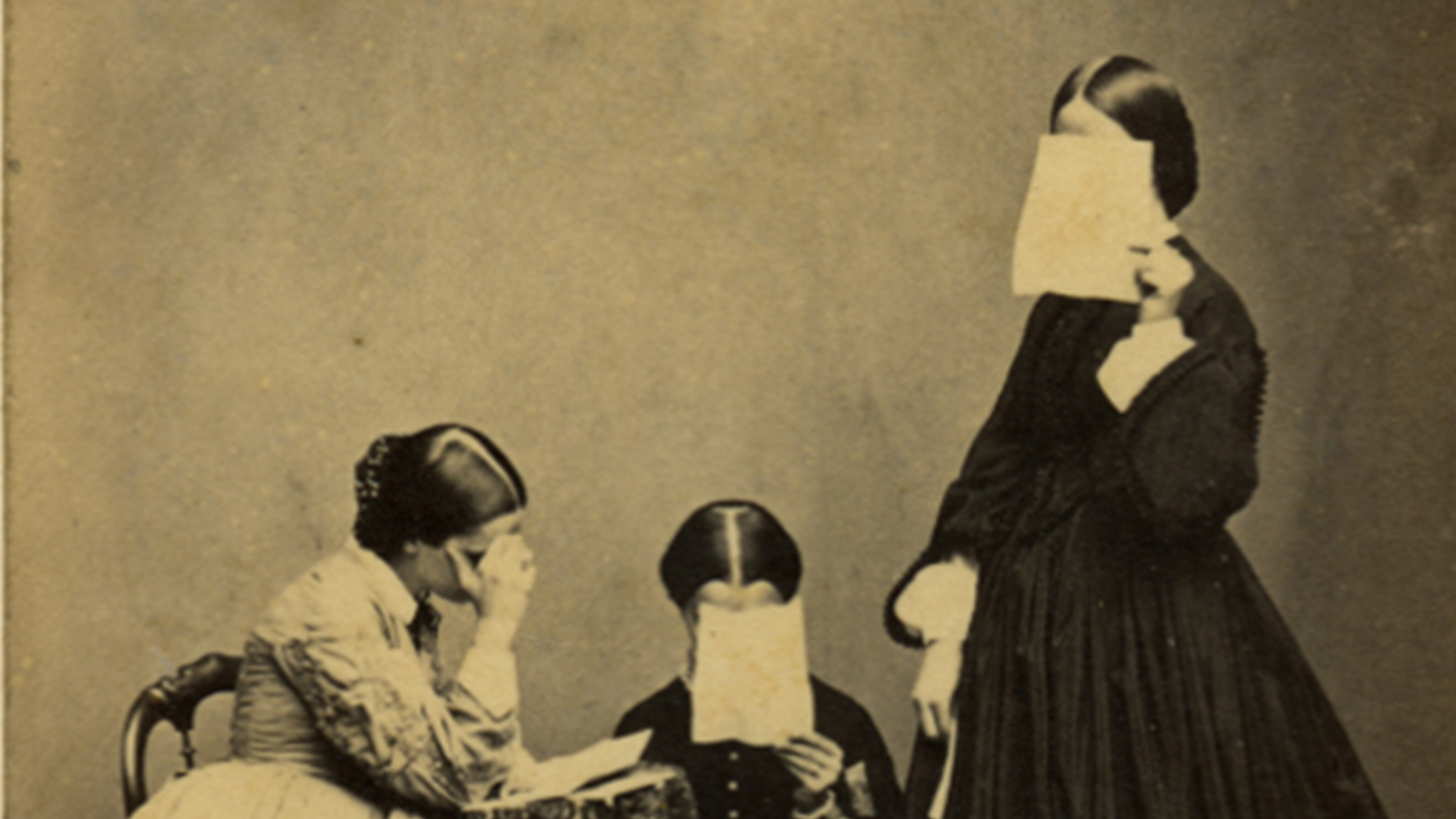
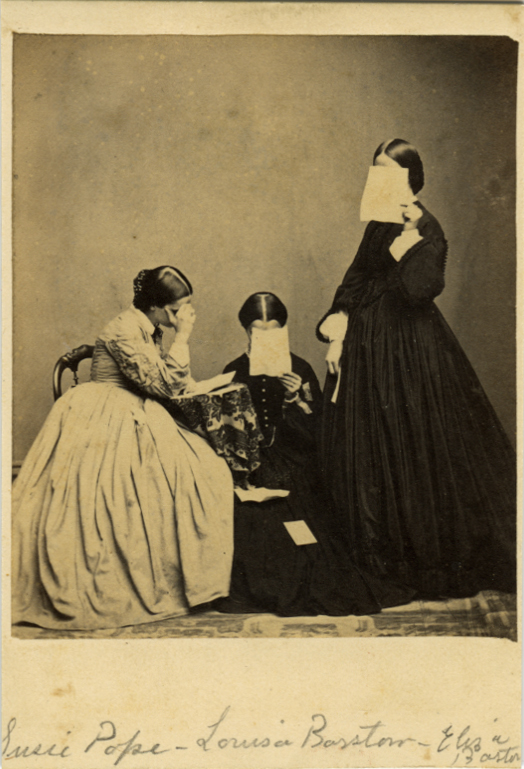
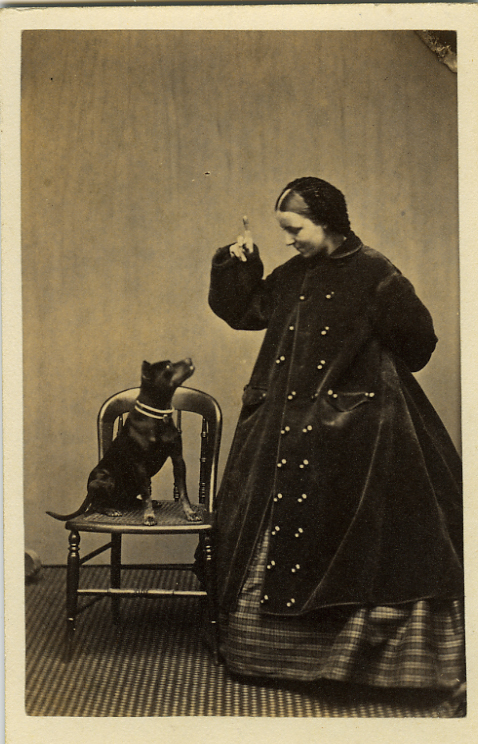
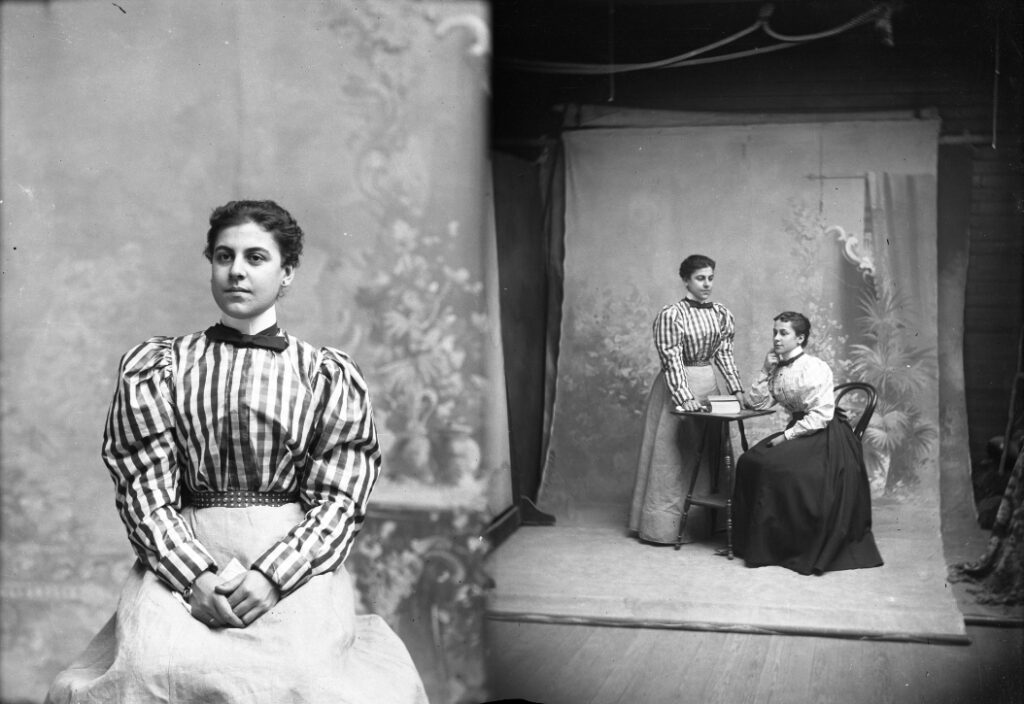
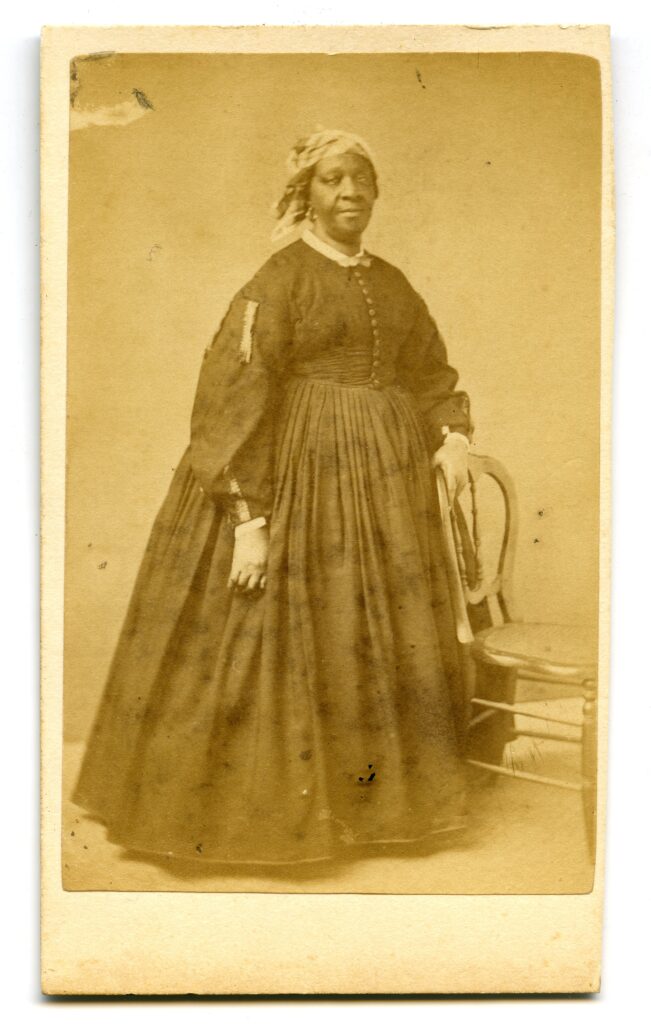
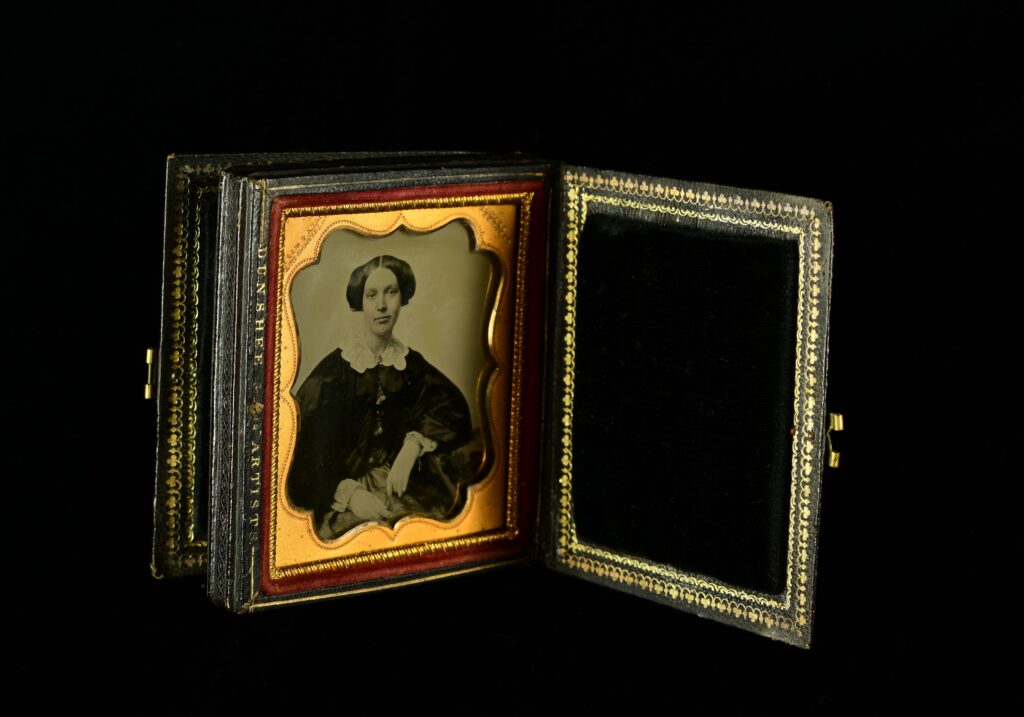
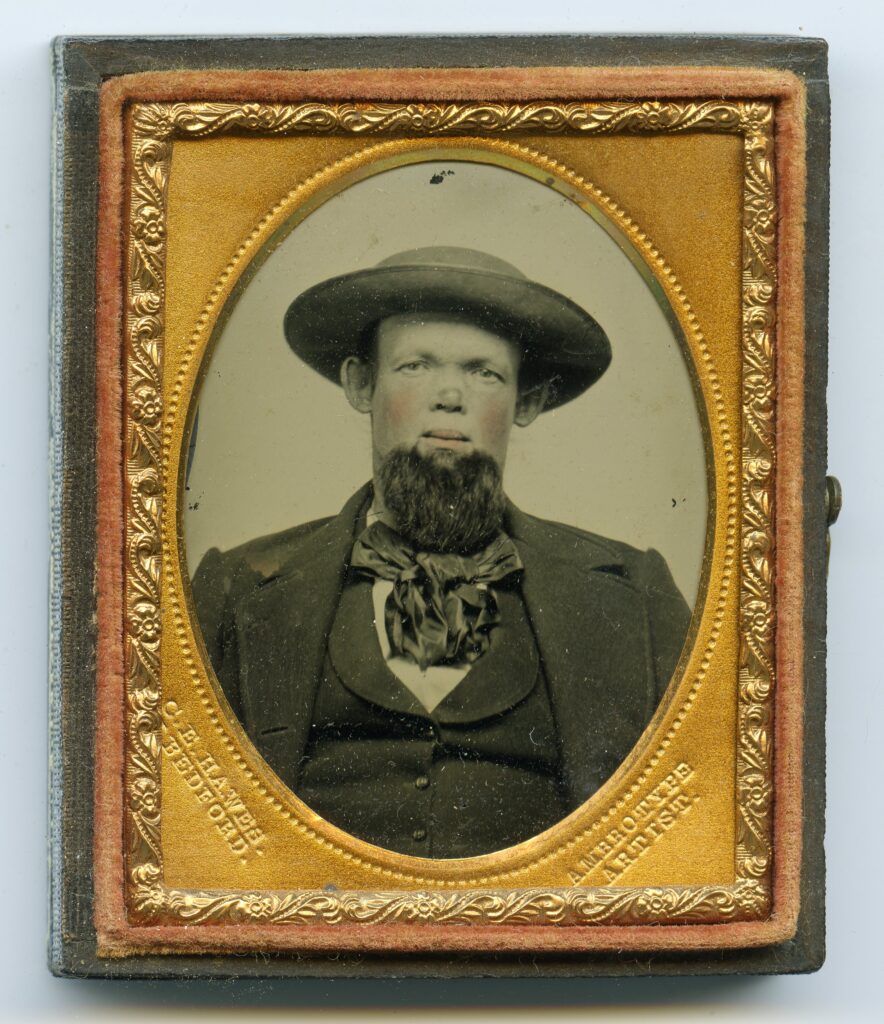
“Look pleasant, please,” George F. Parlow (1826-1890) reportedly said to sitters when they faced the camera in his studio. “Look pleasant, please”: Early Portrait Photography in New Bedford highlights the New Bedford Whaling Museum’s collection of portrait photographs made between the time of photography’s invention in 1839 and the start of a new century in the 1900s. By then, snapshot photography was accessible to a broader audience and portrait studios were less in demand. This exhibition features different kinds of early photography, such as daguerreotypes, ambrotypes, tintypes, carte-de-visites, cabinet cards, gelatin silver prints, and albums, celebrates the studio photographers who moved the medium forward in New Bedford, and examines the unique cultural landscape that unfolded around them.
New Bedford changed dramatically between 1839 and 1900. The whaling industry rose and fell, communities shifted and changed, waves of immigration brought new ideas, challenges, and tensions, and technology transformed. These changes are reflected in photography. For people of all backgrounds, the photo studio was a space where different relationships played out and where photographers and sitters represented personal identities together. The exhibit explores what the studio was like, and who belonged there—as photographer or sitter.
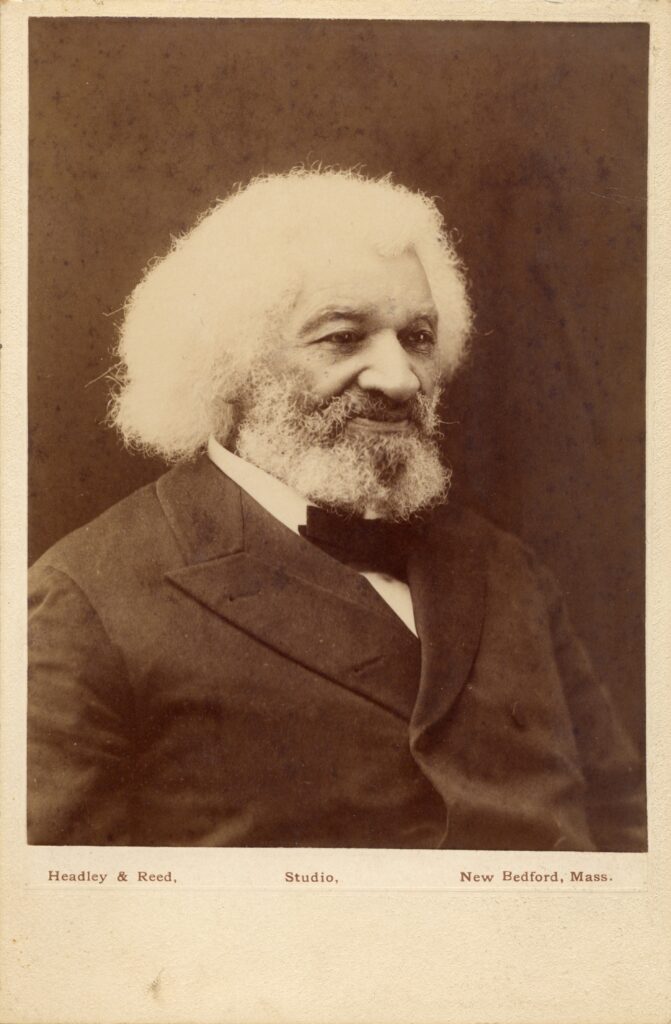
The exhibition brings to life the photographic studio of the 1800s with painted backdrops, a large format camera, and advertisements. It highlights important photographers in the collection including brothers Charles Bierstadt (1819-1903) and Edward Bierstadt (1824-1907), itinerant practitioner Edward S. Dunshee (1823-1907), the area’s first woman photographer Hannah H. Worthing (1843-1920), Azorean photographer Manuel Goulart (1866-1946), and Black photographer James E. Reed (1864-1939). They captured the likenesses of well-known figures like Frederick Douglass, as well as many sitters whose names are no longer known. “Look pleasant, please” invites visitors to reflect on their own experiences with photography, portraiture, and how to “look pleasant” themselves.
This project is sponsored in part by the organizations listed below.
The William Wood Foundation
Ahab’s Head: American Vengeance, An installation by Heidi Whitman
New Bedford Whaling Museum
Center Street Gallery
December 13, 2025-May 3, 2026
Boston-area mixed-media artist Heidi Whitman (b. 1949) is fascinated with obsession. For over five years Whitman has been immersed in an artistic project that aims to capture the dread and obsession underlying Herman Melville’s iconic literary work Moby-Dick; or, the Whale (1851). In March of 2020, Whitman reread Melville’s classic novel, one chapter a day. In her re-reading, she found connections between violence and mania in the novel and the relentless fixation on vengeance in America today. These two passages in Chapters 44 and 135 especially resonated with Whitman:
"While thus employed, the heavy pewter lamp suspended in chains over his
(Ahab's) head, continually rocked with the motion of the ship, and for ever threw
shifting gleams and shadows of the lines upon his wrinkled brow, til it almost
seemed that while he himself was marking out lines and courses on the wrinkled
charts, some invisible pencil was also tracing lines and courses upon the deeply
marked chart of his forehead…. For with the charts of all four oceans before him,
Ahab was threading a maze of currents and eddies, with a view to the more
certain accomplishment of that monomaniac thought of his soul.…”
“Now small fowls flew screaming over the yet yawning gulf; a sullen white surf beat against its steep sides;
then all collapsed, and the great shroud of the sea rolled on as it rolled five thousand years ago.”
-Herman Melville, Moby-Dick or the Whale
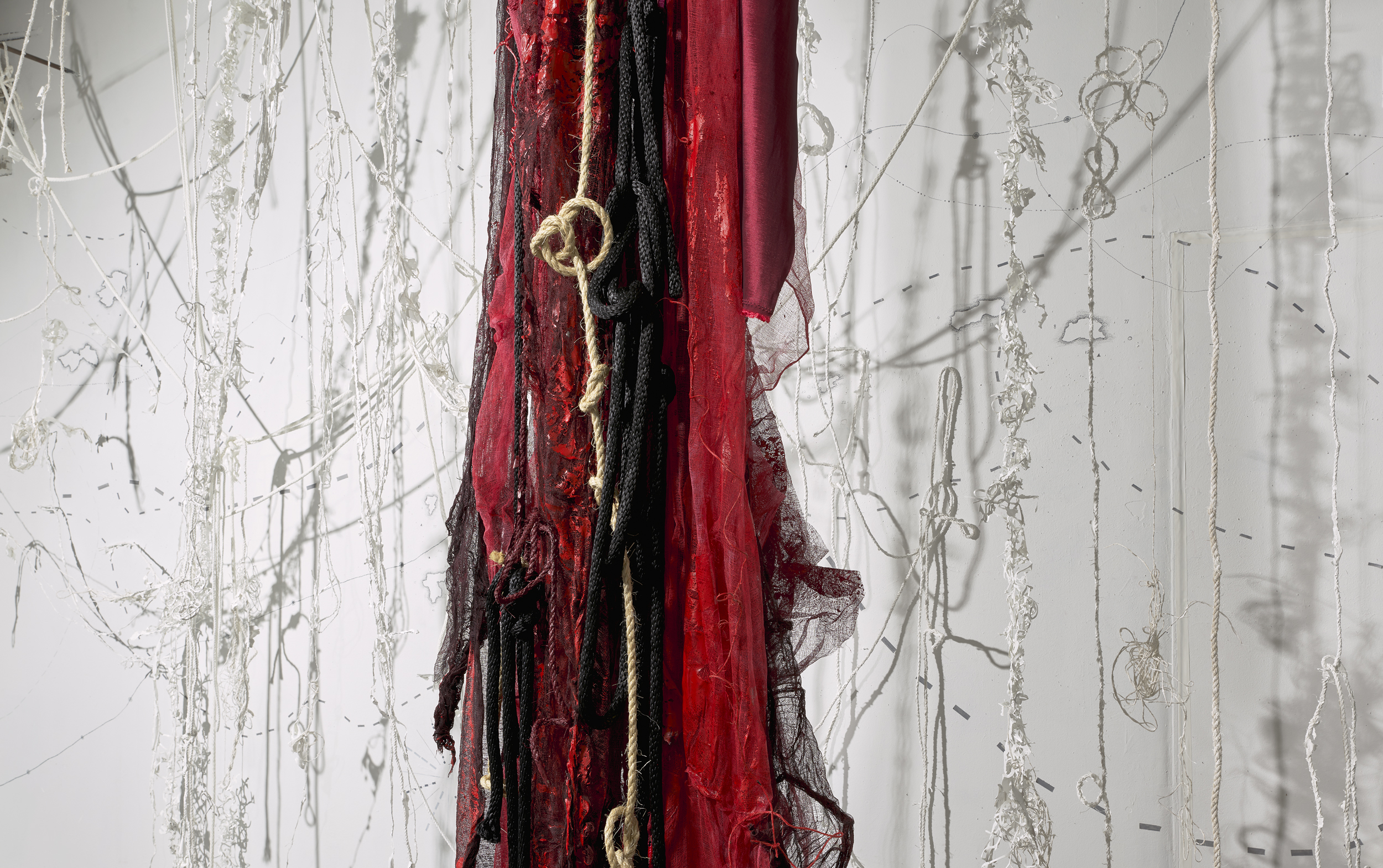
In Ahab’s Head: American Vengeance, a new installation work created for the New Bedford Whaling Museum, Whitman seeks to capture Ahab’s madness and the ominous feeling of dread and inevitable violence that pervades the novel. In this work, Whitman encourages visitors to reflect on how these themes are also mirrored in American society. Hanging sculptural forms made from rope and fabric cast shadows on wall-drawn charts depicting fictitious whaling voyages. Two giant assemblages, one inspired by Ahab and Moby-Dick and the other of the destruction of the ship, the Pequod. Together with a newly created soundscape and weaponry from the Museum collection, Ahab’s Head will place visitors at the center of Ahab’s obsession and offer a meditation on violence in the world of Moby-Dick and beyond.
Artist Statement
“In March 2020 I reread Moby-Dick; or, the Whale, one chapter a day. The dread and obsession in this great novel of whaling and the ocean echoed how I felt at that time in the pandemic. My installation, Ahab’s Head: American Vengeance, in referring to Moby-Dick, addresses the relentless American obsession with violence. White ropes and string hanging throughout the installation cast shadows on wall drawings depicting fictitious charts of whaling voyages. A sense of ominousness pervades the mapped space. The extraordinary chapter in Moby-Dick, ‘The Whiteness of the Whale,’ particularly inspired this installation.
Ahab and Moby-Dick are doppelgangers. As evil twins they're out for mutual destruction. In their total focus they epitomize vengeance. A wall hanging/assemblage at one end of the installation bristles with whale and human eyes. Another large construction conjures up the sinking of the ship, the Pequod, and the darkness of violence. In recent installations I use mapping as a device to describe America’s narrative of past and present violence and greed.”
About Heidi Whitman
Heidi Whitman’s installations, constructions, paintings, and drawings are invented terrains or mental maps. Whitman’s installation, “New World”, was included in Wayfinding: Contemporary Artists, Critical Dialogues, and the Sidney R. Knafel Map Collection at the Addison Gallery of American Art in 2020-21. Other recent exhibitions include Papertown at the Fitchburg Art Museum, Charting the World: Subjective Mapping at Suffolk University, Crossing Boundaries: Art// Maps at the Leventhal Map Center at the Boston Public Library, Heidi Whitman: Mental Map at Carroll and Sons Gallery in Boston, and The Map as Art at the Kemper Museum of Contemporary Art in Kansas City. Earlier exhibitions include shows at the Christopher Henry Gallery in New York, Scope Miami, Pierogi Gallery, the Montserrat College of Art, Wheaton College, the Boston Drawing Project, Clark University, the McMullen Museum of Art, the Southeastern Louisiana Contemporary Art Gallery, and Harvard College. Whitman has exhibited internationally, most recently in The Art of Mapping at TAG Fine Arts in London.
Whitman’s work was featured in Katharine Harmon’s book The Map as Art, Princeton Architectural Press, 2009. In 2007 Whitman completed a commission for the City of Cambridge (Jill Brown-Rhone Park). Her works are in collections across the United States, including the Addison Gallery of American Art, the McMullen Museum of Art, Tufts University, the Fitchburg Art Museum, the Boston Public Library, IBM, Simmons College, Bank of America, Boston University, the Federal Reserve, JPMorgan Chase, and Fidelity Investments.
She graduated from the University of California at Berkeley and the School of the Museum of Fine Arts in Boston. Whitman is a 2021 recipient of the Mass Cultural Council fellowship in Sculpture/Installation/New Genres. She is also a recipient of the Clarissa Bartlett Traveling Scholarship awarded by the Trustees of the Museum of Fine Arts. She was a faculty member at the School of the Museum of Fine Arts at Tufts University from 1983 to 2019.
Morabeza: Cape Verdean Community in the South Coast
New Bedford Whaling Museum
San Francisco Gallery
May 24, 2025-February 24, 2026
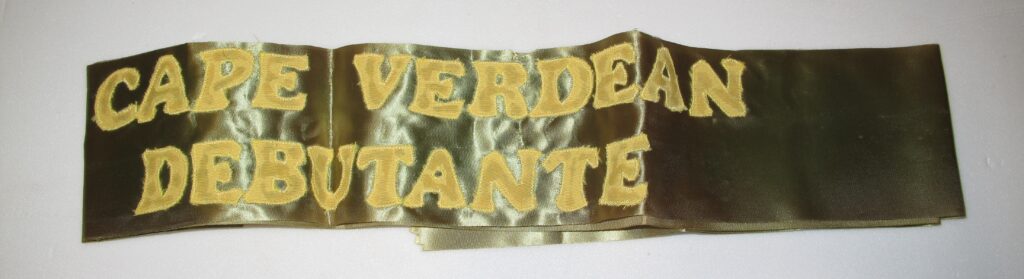
In 2025, communities across the world will celebrate the 50th anniversary of Cape Verdean independence from Portugal. New Bedford and the greater South Coast area of New England are home to one of the largest and longest-standing Cape Verdean communities outside of Cabo Verde. To mark this occasion, the New Bedford Whaling Museum presents the Contemporary Cape Verdean 2025 project, which explores the Cape Verdean American and Cape Verdean experience through the lens of contemporary art and community storytelling.
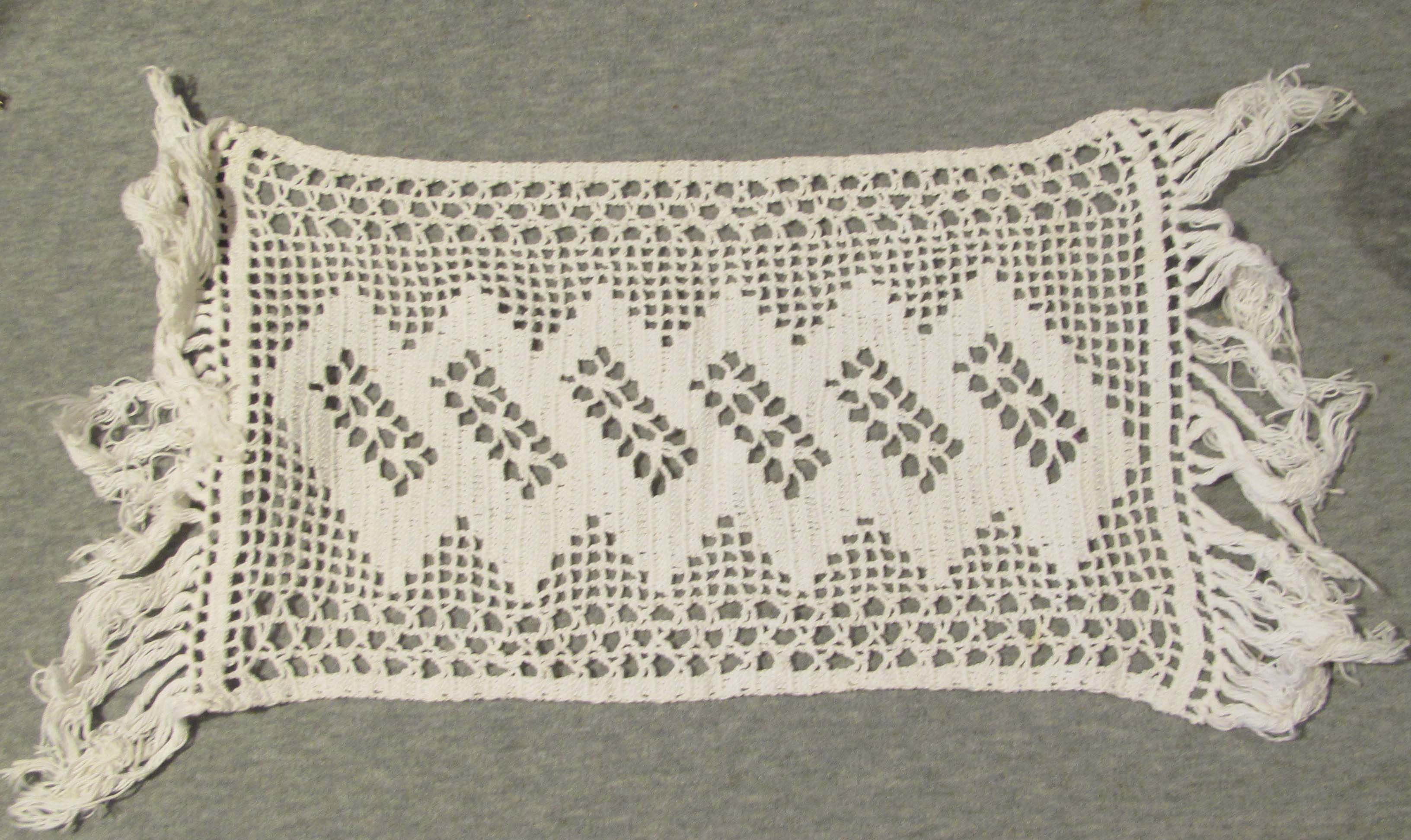
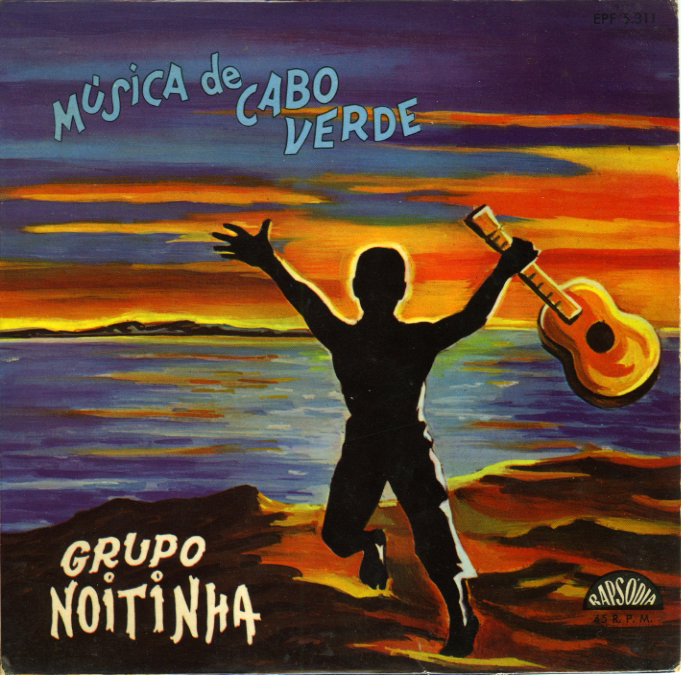
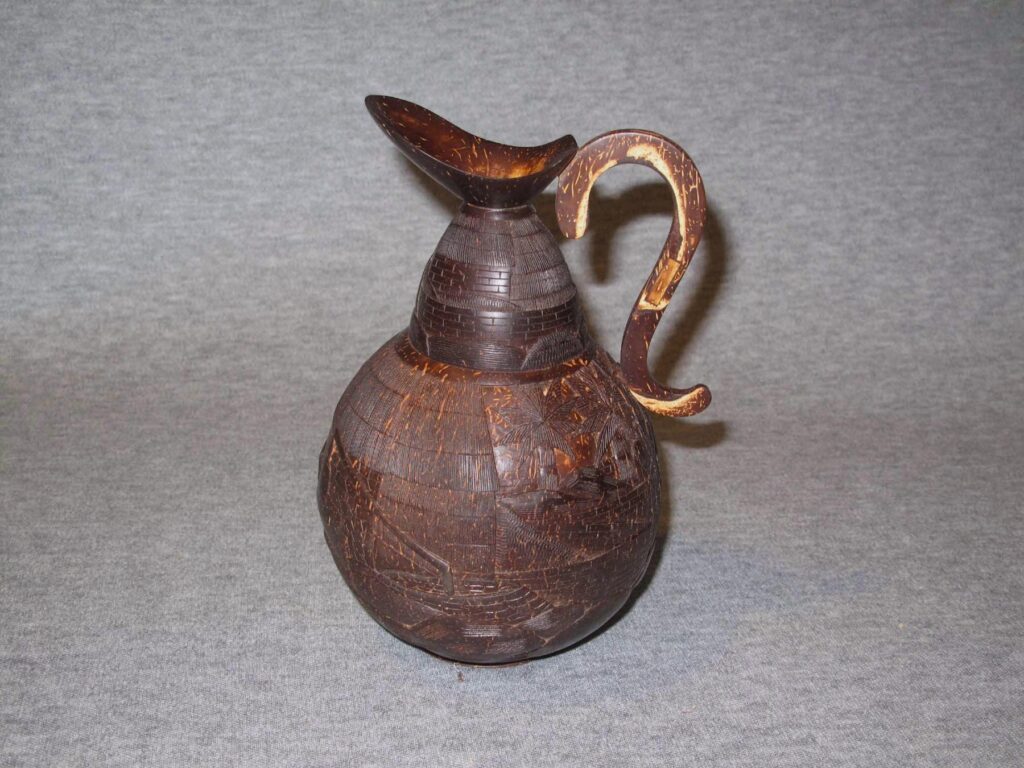
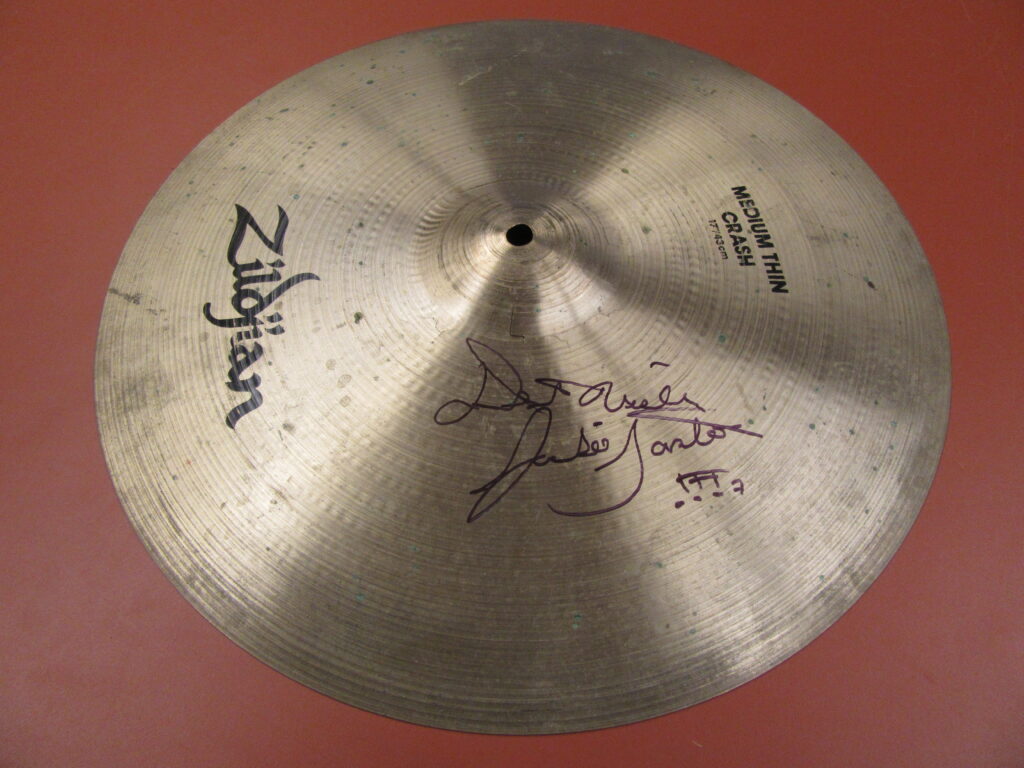
The temporary exhibition Morabeza: Cape Verdean Community in the South Coast is hosted in the San Francisco galleries, adjoining the permanent gallery devoted to Cape Verdean culture that opened in 2011. It features personal stories, oral histories, music, photographs, and belongings from individuals and community organizations to tell the story of the Cape Verdean diaspora across the region, spanning the South Coast, Rhode Island, and Cape Cod. We highlight the rich Cape Verdean cultural traditions and organizations in New England and explore continuing connections with Cabo Verde, affirming its import to the region’s history and future.
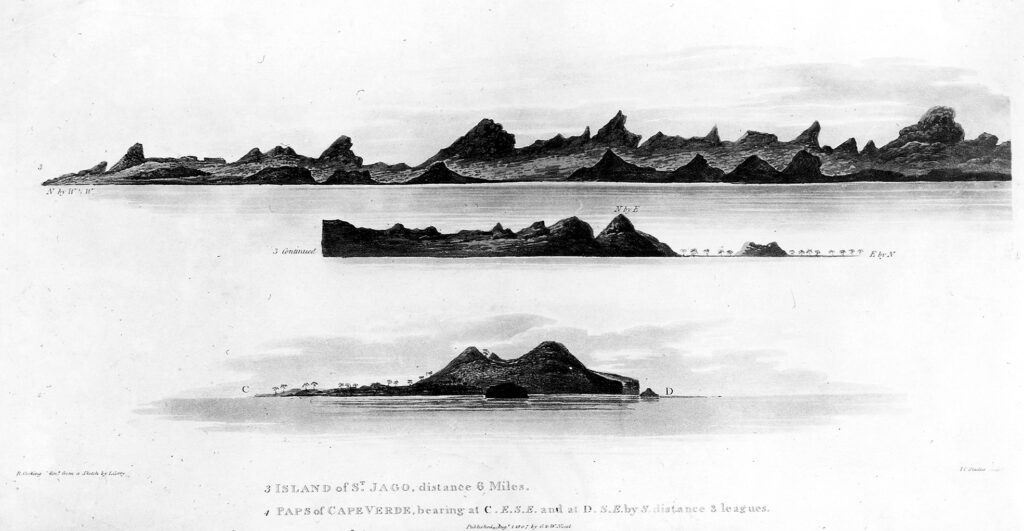
The Republic of Cabo Verde, previously known as Cape Verde, includes ten volcanic islands off the coast of Dakar, Senegal, West Africa. Colonized by Portugal in the 1600s, and an epicenter of the early slave trade, Cabo Verde is a mix of Portuguese and African cultural heritage. The South Coast of Massachusetts is home to the first Cape Verdean community in the United States. The ties between Cabo Verde and New Bedford originated with whaling, as American whaling captains routinely stopped at the islands for supplies and crew. Many Cape Verdean crew members then settled in New Bedford. As whaling declined in the early 1900s, Cape Verdean mariners bought and repurposed oceangoing vessels to develop a packet trade. Regularly scheduled routes to the islands carried cargo and passengers, strengthening cultural bonds through goods exchanged and the many immigrants brought to New England on packet ships like the ERNESTINA and CORIOLANUS. Between 1800 and 1921 at least 70% of Cape Verdean immigrants to the U.S. arrived in New Bedford, nicknamed the “Cape Verdean Ellis Island.” As of the 2020 Census, 70,040 Cape Verdean Americans live in Massachusetts, the largest population of any state.
Morabeza: Cape Verdean Community in the South Coast focuses on important themes including immigration, home, family, cultural identity, music, food, art, religion, and neighborhood. Morabeza is a Cape Verdean creole word to express a particularly Cape Verdean style of hospitality. The exhibition, which is organized in partnership with regional institutions and the Museum’s Cape Verdean Advisory Board, will illuminate stories from the community about the community, from baptismal records and marriage certificates from Our Lady of the Assumption, the first Cape Verdean Catholic Church in the Americas founded in 1905, to early musical recordings of big band performances and Tavares, from the stories of how people got their nicknames to recipe books published by civic organizations. The exhibit will center the social clubs and neighborhoods that used parades, cards, sports, music, and food to build community ties, and explore activism and racial identity in the Cape Verdean diasporic community. Like other immigrant communities of color, many Cape Verdeans experienced discrimination and prejudice in the United States. Over four generations of immigration to the US, community experiences and transnational connections to Cabo Verde have changed. This project explores each theme intergenerationally, underscoring how Cape Verdean identity is individualized and has shifted over time and across generations.
The exhibit will help visitors understand that the region of the South Coast, Rhode Island, and Cape Cod is home to a unique cultural story. The Cape Verdean story is unique but it also reflects some of the similar experiences held by other immigrant communities in our region. We hope that through this project visitors gain a greater awareness of the diverse histories of Cabo Verde, the histories of Cape Verdean immigration – in the past and today, and the broad cultural and social threads that weave together a distinctively Cape Verdean American identity, as reflected in our own communities and the area at large.
Support the Exhibit
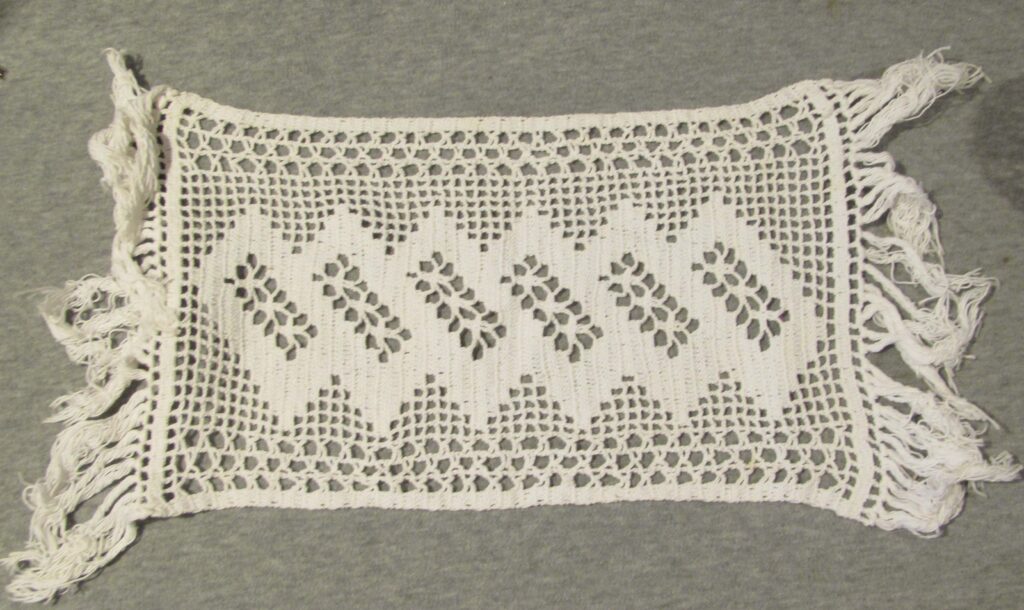
Individual donors and businesses are invited to support this exhibit in celebration of the 50th anniversary of Cape Verdean Independence.
Click here to view the sponsorship package which describes the levels of support and sponsor recognition
This project is sponsored in part by the organizations and individuals listed below.
William M. Wood Foundation
This program is funded in part by Mass Humanities, which receives support from the Massachusetts Cultural Council and is an affiliate of the National Endowment for the Humanities.
SPONSOR
Patricia Andrade
Christina A. Bascom, in honor of
Carl J. Cruz and Eugene A. Monteiro
Bristol Wealth Group / Louis M. Ricciardi
Saunders-Dwyer Home for Funerals,
In Memory of Richard T. Saunders
Amanda G. Strong
SUPPORTER
Roger Adair & Bette Harada
Susan and Antonio Costa
Carl J. Cruz
Peter N. Silva
Donna Sachs & Gilbert Perry
Gunga Tavares
Sara & Christopher Quintal
DONOR
The Bisca Tournament Club
Laurie & John K. Bullard
Cape Verdean Association in New Bedford
Cruz Companies
Dr. Terrence A. & Dianne T. Gomes
Ana & John P. Gomes Jr.
Marilyn Gonsalves
Jeannette & Brad Leal
Kathryn McNiel, in memory of Cheryl Rounsevell Kuechler
Eugene and Benita Monteiro
Mike and Melinda Monteiro
Robert Monteiro and Linda Almeida
Neves Travel
Dr. Bruce Rose & Cynthia Rose
Bernadette Souza
FRIEND
Anonymous (5)
Kathy Arruda
Ronald Barboza
Dianne Bartley
Paula Carmichael
Tanina M. & Melanie Edwards-Tavares, in memory of John and Alice Carmo
Brian Glennon
Michelle Gomes, in honor of Anna Gomes
Patricia Grime
Janne Hellgren & Jack Boesen
Stephen Kearns
Carol Kolek & Carlton Dasent
Margaret & Timothy Lee
Marlene L. Lopes
Chris Matos
Renee Neely
Rhoda Purcell
Timothy Robidoux
Dolores Rodrigues
Lucy Rose
Kimberley A. Rose Berger
Inner Bay Cafe - Tony Soares
Adrian R. Tio
Miriam Weizenbaum
Richard Wolverton